


Meet Ambassador Sanjeev Jain: The Ambassador Heading Where Few Diplomats Ever Want to Go
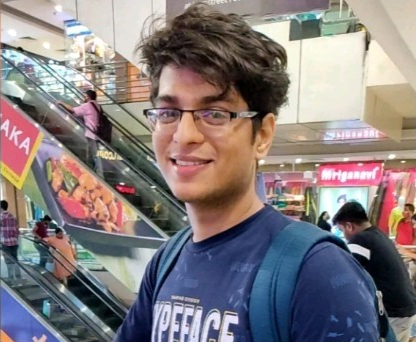
Diplomacy remains humanity's belief that conversation can still outrun confrontation. Few places test that belief more relentlessly than Pyongyang.

North Korea is where diplomacy sheds its glamour and reveals its true purpose. While some capitals speak through commerce and others through culture, Pyongyang speaks through silence, and only seasoned diplomats learn how to hear what is not clearly being said. In a city where every conversation is measured, every interaction is regulated, and every signal carries great weight, diplomacy becomes an exercise in patience rather than publicity.
That is why India's decision to appoint Sanjeev Jain, a 2008-batch Indian Foreign Service officer, as its next Ambassador to the Democratic People's Republic of Korea deserves far more attention than a routine diplomatic transfer usually receives. His move from Cabo Verde to Pyongyang is less about changing addresses and more about placing an experienced hand in one of the world's most closely watched geopolitical theatres.
A Small Embassy at the Centre of Big Geopolitics
India's embassy in Pyongyang is among its smallest diplomatic missions, but only a few postings place an ambassador closer to the fault lines of global politics. The Korean Peninsula technically remains at war more than seventy years after the 1953 Armistice Agreement because no formal peace treaty has ever been signed. Every development there influences the measured calculations of the United States, China, Russia, Japan and South Korea. For India, maintaining a diplomatic presence in one of the world's most opaque political systems gives it a reliable channel of communication in a region where misunderstandings can quickly escalate into international crises.
India's engagement with the Korean Peninsula stretches back more than seven decades, when it chaired the United Nations Neutral Nations Repatriation Commission after the Korean War under Major General K. S. Thimayya. Years later, India opened a Consulate General in Pyongyang in 1968 before upgrading relations to embassy level in 1973. Successive governments have preserved that engagement through changing geopolitical landscapes, reflecting a belief that even difficult relationships deserve steady diplomacy.
The approach mirrors India's larger foreign policy instinct, where it has consistently supported peace, denuclearisation and dialogue on the Korean Peninsula while maintaining diplomatic ties with Pyongyang. At the same time, India has strengthened strategic partnerships with South Korea, Japan and the United States and remains committed to implementing relevant United Nations Security Council sanctions. Preserving such delicate equilibrium requires judgement more than grandstanding.
A Disciplined Bureaucrat in a Tricky Domain
Sanjeev Jain's diplomatic career reflects the changing priorities of Indian foreign policy over the past two decades. A science graduate from the University of Delhi who entered the Indian Foreign Service through the 2008 Civil Services Examination, he has served across an unusually diverse range of diplomatic environments.
His assignments in Dubai, Paris, Berlin, Tokyo, Osaka and Kandy exposed him to political reporting, economic diplomacy, consular affairs, cultural outreach, science and technology cooperation, media engagement and diaspora relations. Such geographic diversity offers something more valuable than an impressive résumé. It develops the ability to read different political cultures, adapt to varied institutional settings and recognise how regional developments intersect with global strategy.
His tenure at the Ministry of External Affairs as Director handling ASEAN countries added another important dimension. Working at the heart of India's Act East Policy meant engaging with regional diplomacy, high-level consultations and tactical coordination across Southeast Asia. His involvement in preparations for the BRICS Summit further sharpened his experience in multilateral negotiations, where outcomes often depend as much on preparation as on persuasion.
These experiences become all the more important because an ambassador in Pyongyang cannot afford to see North Korea in isolation. Every conversation is shaped by the wider landscape of East Asia, where every political assessment carries implications beyond bilateral relations.
India's First Resident Ambassador to Cabo Verde
Before being entrusted with Pyongyang, Jain was entrusted with something equally demanding. In 2023, he became India's first resident Ambassador to Cabo Verde, leading a newly established diplomatic mission from the ground up. Building an embassy requires far more than ceremonial diplomacy. It demands institution-building, administrative leadership, resource management and the ability to translate policy objectives into functioning institutions.
That stint tested a different set of diplomatic instincts. There were no established routines to inherit and no institutional memory to rely upon. Every system had to be built, every relationship patiently cultivated, and every administrative challenge managed with limited resources.
During his tenure, India expanded cooperation with Cabo Verde across capacity building, digital technology, agriculture, human resource development and development partnerships. The assignment demonstrated an ability to combine vision with practical execution.
These qualities assume greater significance in Pyongyang, where diplomatic activity often unfolds within severe operational constraints. Success depends less on public diplomacy and more on disciplined administration, careful reporting and institutional resilience.
Every Word Matters
Few diplomatic postings demand greater restraint than North Korea. Foreign diplomats operate under carefully defined protocols, with limited access to senior leadership and tightly regulated interactions beyond official channels. The informal conversations that often provide valuable political insights elsewhere are scarce. Information moves slowly, access is restricted, and every engagement requires meticulous attention to protocol. Environments like these reward patience.
North Korea's expanding missile and nuclear programmes continue to shape regional security calculations. The ripple effects extend well beyond the peninsula, influencing defence policies, alliance structures and diplomatic engagements across East Asia.
For India, relations with North Korea form part of a delicate balancing act. New Delhi continues to strengthen partnerships with Japan, South Korea and the United States while preserving diplomatic engagement with Pyongyang in line with its international obligations. Such a role demands diplomats capable of navigating geopolitical complexity with restraint, consistency and sound judgement. Diplomacy remains humanity's belief that conversation can still outrun confrontation. Few places test that belief more relentlessly than Pyongyang.
A Posting with a Vital Signal
Sanjeev Jain's appointment appears less like a routine transfer and more like a carefully calibrated decision. His experience across East Asia gives him familiarity with the region's security dynamics. His postings in Germany and France exposed him to European thinking on governance, technology and international security. His work on ASEAN strengthened his understanding of the Indo-Pacific's evolving geopolitical architecture, and his leadership in Cabo Verde demonstrated an ability to manage a mission independently under demanding conditions.
Collectively, these experiences have shaped a diplomat comfortable with political analysis, economic engagement, institutional leadership and multilateral diplomacy. Those are precisely the attributes required in a capital where opportunities for conventional diplomacy remain limited, but the need for tactical awareness is exceptionally high.
The appointment also reflects India's diplomatic culture of placing experienced professionals where they matter most. It signals New Delhi's belief that sustained engagement remains indispensable, even with difficult partners.
As Sanjeev Jain prepares to take charge in Pyongyang, he enters a capital where silence often carries more meaning than speeches. History remembers summits and treaties, but lasting stability often depends on diplomats who tactically keep channels of communication open. In one of the world's most guarded capitals, that may be the most important diplomatic skill of all.


Comments