


From Demographic Dividend to Digital Dominance: How the LGO Bridges India and Europe

Talent is India’s tide, and Europe has opened its shores.

As global economies race toward digital dominance, the question is no longer whether talent will move, but who will attract it and shape it. On February 18, 2026, in New Delhi, that contest took institutional form. With the launch of the European Legal Gateway Office, India and the European Union signalled that the future of their partnership is written in code and consensus.
A Gateway in an Age of Talent Wars
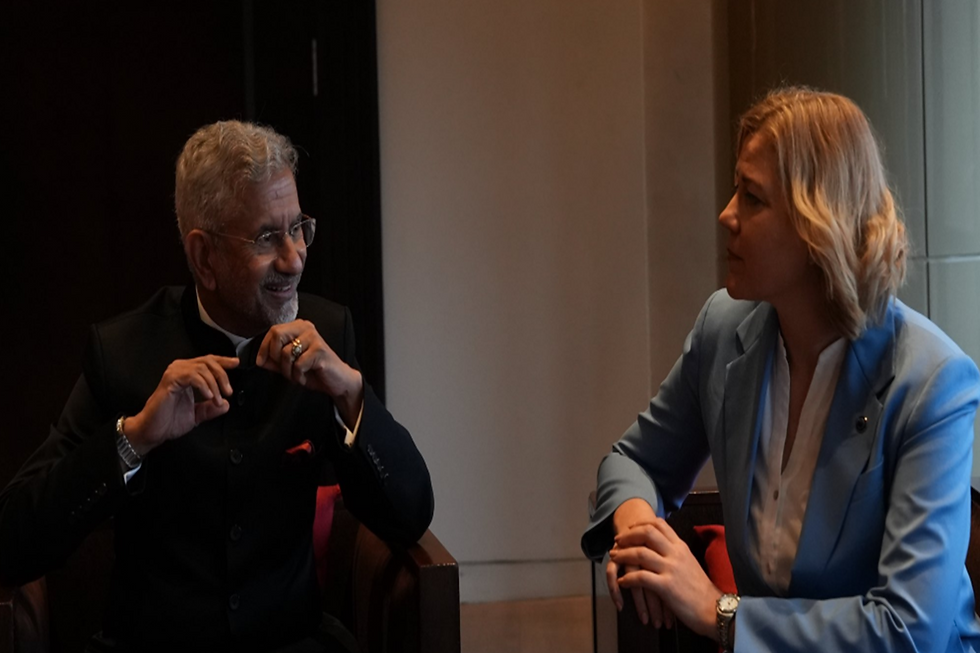
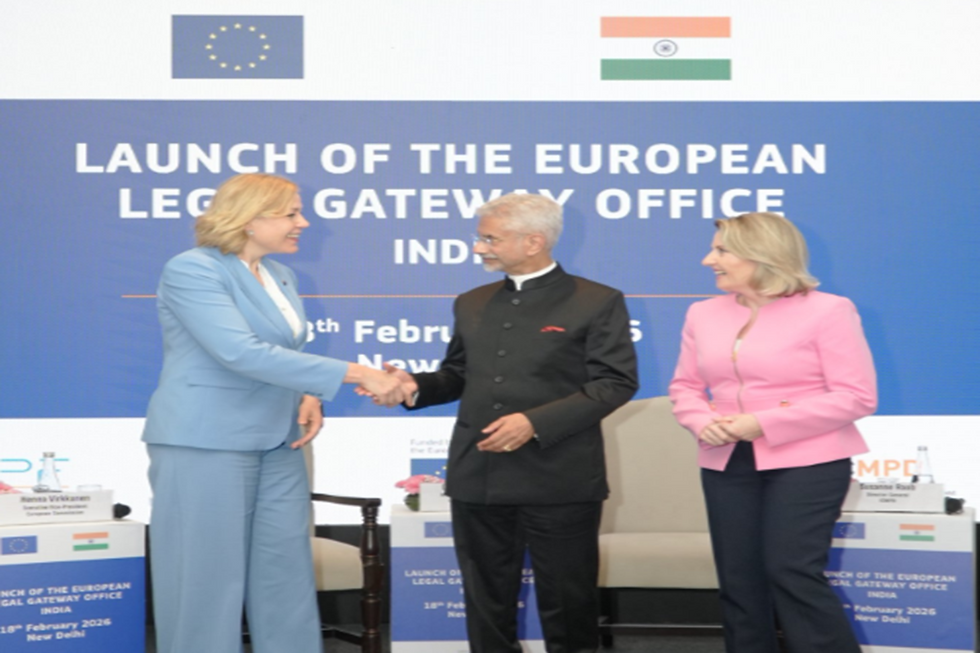
The European Legal Gateway Office is more than a bureaucratic outpost. Formally inaugurated by Dr. S. Jaishankar and Henna Virkkunen, and presented by Susanne Raab of the International Centre for Migration Policy Development, it marks the first time the EU has established such an office in a partner country.
What makes the LGO significant is not its administrative function, but its political symbolism. While Europe is ageing, India is coming of age. Europe’s demographic winter and India’s demographic dividend are complementary forces waiting for alignment.
By 2030, the EU’s working-age population is projected to decline by nearly five million. By 2050, almost 30 percent of Europeans will be over 65, up from roughly 21 percent today. In 2023 alone, more than 75 percent of EU companies reported difficulty finding workers with the right skills. India, meanwhile, has over 65 percent of its population under 35. Thus, a generation under 35 finds a gateway to a continent with over 27 nations.
Europe’s Shortage, India’s Surge
The numbers reveal urgency. The EU wants 20 million ICT specialists employed by 2030, up from roughly 9–10 million in 2022. Germany alone reported more than 137,000 unfilled IT positions in 2023. Nearly 60 percent of EU small and medium enterprises struggle to recruit digital specialists.
This is not a theoretical gap. It is an economic constraint. In 2023–2024, Indians became the largest recipients of the EU Blue Card, particularly in Germany. German companies, grappling with chronic tech vacancies, increasingly turned to Indian engineers after Berlin simplified its skilled migration law.
The demand is visible across corporate Europe. Thousands of Indian professionals today work in firms such as SAP, Siemens, and ASM, which are companies central to Europe’s digital and semiconductor ambitions. Yet most of these movements occurred through fragmented recruitment channels, private networks, and complex national visa systems. The LGO seeks to replace that patchwork with clarity.
From Patchwork to Platform
Operationally, the LGO is designed as a one-stop hub. It offers Indian students, researchers, and professionals structured information on visa pathways, qualification recognition, and skills requirements across all 27 EU member states. It combines a physical office in New Delhi, a support office within the EU, and a digital platform that centralises legal pathways.
For Indian professionals navigating Germany’s Blue Card or France’s Talent Passport visa, this matters. Under France’s Talent Passport scheme, Indian founders and AI specialists have already relocated to innovation hubs like Paris and Lyon. Some joined Station F, Europe’s largest startup campus.
But for every success story, there have been frustrations. In countries like Italy and Spain, Indian healthcare workers have faced prolonged delays due to qualification recognition barriers. Meanwhile, Germany has signed agreements with India to recruit nurses to address acute shortages.
The issue has been coordination. The LGO’s core promise is to reduce informational asymmetry. By guiding applicants through frameworks such as the European Qualifications Framework and clarifying national differences, it aims to curb exploitation and irregular migration.
A Strategic Partnership, Not Just a Visa Desk
The LGO was announced at the 16th EU-India Summit in New Delhi, attended by Ursula von der Leyen and Antonio Costa. It sits within a broader EU-India Joint Strategic Agenda.
The EU is India’s largest trading partner in goods, with bilateral trade exceeding €120 billion annually. The EU accounts for roughly one-sixth of India’s total exports. More than 6,000 European companies operate in India, employing millions directly and indirectly.
This is already a dense economic relationship. Post-Brexit shifts have further reshaped migration flows. After the United Kingdom exited the EU, many Indian professionals who once targeted the UK began exploring opportunities in EU states like Ireland and the Netherlands.
Dublin’s ecosystem, home to the European headquarters of firms like Google and Meta, saw rising Indian participation in fintech and cloud computing. Talent is India’s tide, and Europe has opened its shores.
Europe seeks to secure its tech sovereignty and reduce dependency in critical sectors like semiconductors and AI. Only one in three ICT specialists in the EU is a woman, underscoring the need to diversify and expand the talent pool. India’s vast and increasingly gender-diverse STEM pipeline offers one answer.
Mobility with Meaning
For India, the implications stretch beyond employment. Indian IT exports to Europe exceeded $50 billion in 2025. Exposure to advanced European research ecosystems can accelerate knowledge transfer and innovation back home. Remittances already surpass $100 billion annually for India, reinforcing domestic consumption and investment.

This is not about brain drain but brain circulation. As Jaishankar described at the launch, the LGO is “a bridge between our societies.” That bridge matters in an era of geopolitical volatility, where resilient supply chains and trusted partners define economic security.
The EU’s demographic pressures are not temporary. Nor is India’s youth dividend infinite. The window for alignment is strategic and time-bound. If structured well, the LGO could institutionalise a virtuous cycle: skills upgrading, return migration, joint research, and deeper commercial integration.
Challenges Beneath the Promise
Ambition, however, must navigate reality. Data privacy compliance under Europe’s GDPR and India’s Digital Personal Data Protection framework will require careful design. Immigration rules still vary across EU member states. Policy coherence will test Brussels’ coordination capacity.
Language barriers and cultural adaptation remain human challenges beyond digital platforms. And yet, the alternative is stagnation. Without structured pathways, Europe risks prolonged labour shortages. Without global integration, India risks underutilising its demographic dividend.
The LGO’s pilot phase will be closely watched. Metrics such as application volumes, satisfaction rates, and employer participation will determine whether it evolves into a durable model.
Expansion beyond ICT is already on the horizon. Healthcare, renewable energy, and advanced manufacturing could follow, especially as Europe advances its green transition.
The Bigger Picture
The contest for talent is reshaping global geopolitics. For decades, the United States dominated as the primary destination for Indian tech professionals. Today, tightening visa caps and backlogs have prompted diversification.
Europe is positioning itself as a structured alternative. The LGO’s emphasis on transparency and bilateral engagement distinguishes it from purely employer-driven programs. It signals that mobility can be strategic, humane, and mutually beneficial.
In that sense, this office in New Delhi represents a quiet recalibration of global talent flows. It is also a recognition of a simple truth: economies no longer compete only through trade tariffs or industrial subsidies. They compete for minds.
A Future Written in Code
The European Legal Gateway Office heralds a new chapter in India-EU relations. It aligns demographic realities with economic needs. It transforms migration from a bureaucratic maze into an informed choice. But its deeper significance lies elsewhere.
In the 21st century, the most contested resource is no longer oil or territory. It is talent. The launch of the LGO suggests that India and Europe understand this. The question now is whether they can convert symbolism into sustained momentum. The answer shall refurbish the fact that the global race for innovation, those who build gateways will shape the century.


Comments