


Across the Blue Horizon: Pabitra Margherita’s Pacific Mission in Vanuatu and Tuvalu Explained

In the grand chessboard of geopolitics, every square decides the game, and India is aware of this reality. The Pacific Islands have emerged as arenas of strategic competition, with major powers seeking influence across the region. India’s response, however, is marked by restraint and subtlety.
Across the vast blue expanse of the Pacific, a new diplomatic current is carrying India’s voice to some of the world’s most remote and vulnerable shores. The April 2026 visit of Minister of State Pabitra Margherita to Vanuatu and Tuvalu may appear modest in scale, yet it signals a consequential shift in India’s foreign policy. It reflects a quiet but deliberate pursuit of presence over prominence in one of the world’s most strategically contested regions.
From Outreach to Enduring Partnerships
If the first step was outreach, the next is anchoring relationships in trust and resilience. India’s engagement with Pacific Island nations has evolved steadily since the launch of the visionary Forum for India-Pacific Islands Cooperation in 2014, which transformed sporadic contact into structured diplomacy. This recently concluded visit builds on that foundation with a focus on continuity and depth.

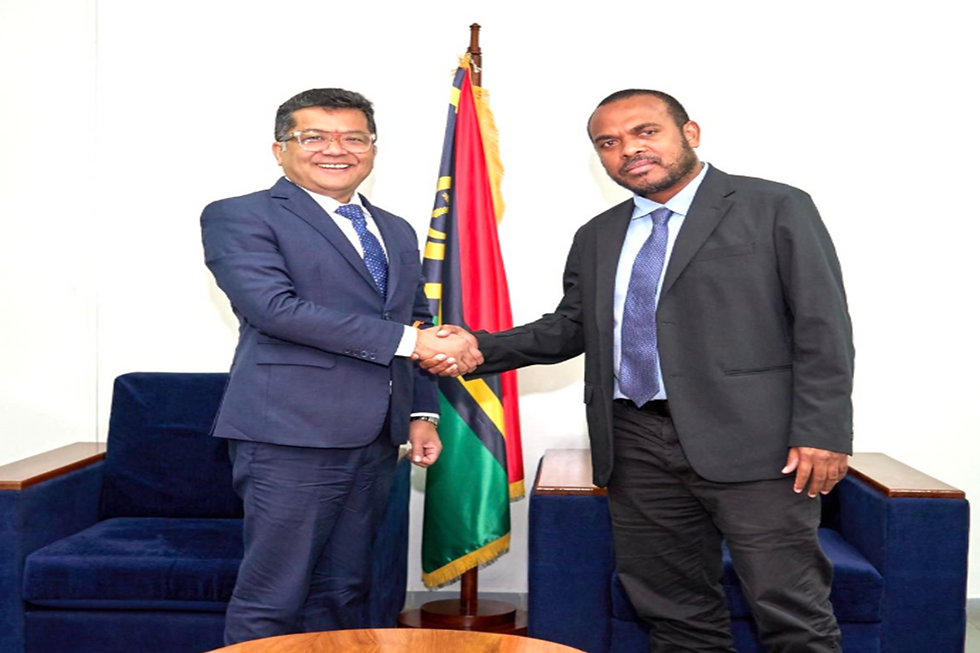
In Vanuatu, discussions with Prime Minister Jotham Napat and Acting Foreign Minister Xavier Emanuel Harry reflected a widening agenda that moved well beyond ceremonial diplomacy. At the heart of these conversations were digital development, capacity building, and climate resilience, each framed as a tailored response to local needs and shaped through consultation rather than prescription.

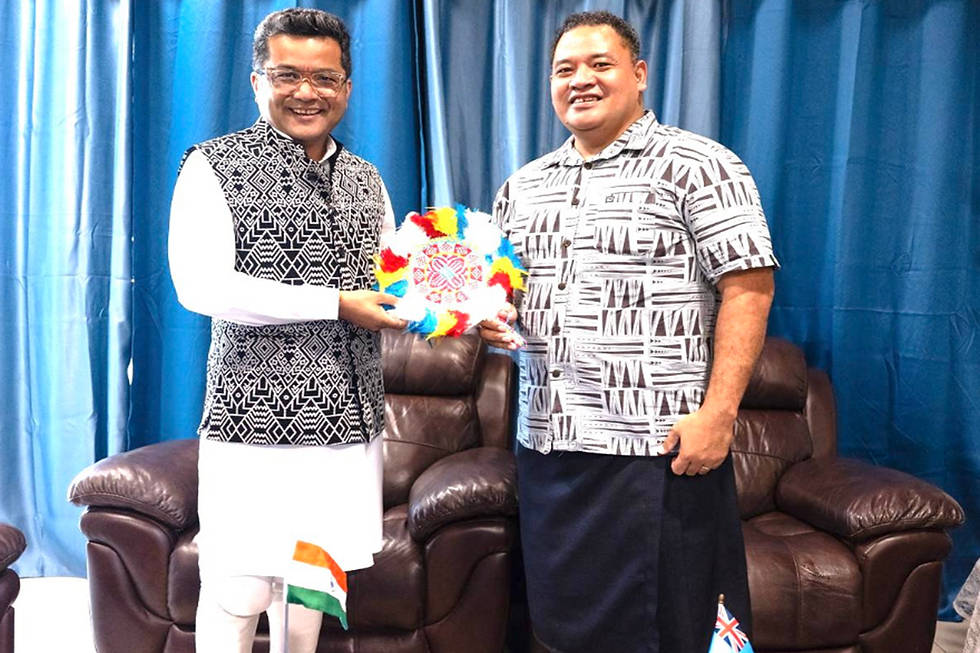
Tuvalu offered a similar pattern, though with a more focused human dimension. Meetings with Governor-General Sir Tofiga Vaevalu Falani and Acting Prime Minister Paulson Panapa underscored the political trust that India has cultivated over time. Engagement with sectoral leaders such as Maina Talia and Hamoa Holona highlighted India's extensive attempt to work across layers of governance.

Development That Reaches the Ground

The rulebook of diplomacy suggests that the strength of a nation lies not only in what it builds for itself, but in what it builds for others. India’s diplomatic outreach in the Pacific reflects this philosophy through tangible, needs-based interventions. In Vanuatu, the Centre of Excellence in Information Technology stands as a symbol of India’s emphasis on digital public goods, a thoughtful reminder that connectivity today is as vital as physical infrastructure.
The approach becomes even more compelling when viewed through lived experience. At the Princess Margaret Hospital in Funafuti, interactions with healthcare professionals reveal a stark truth: medical access in island nations is often a race against geography. India’s collaboration through training, technical assistance, and the “Heal in India” initiative begins to change that equation, turning distance into a more manageable challenge.

In Tuvalu, where communities are dispersed across distant atolls, medical emergencies are deeply intertwined with logistical complexity. The announcement of a sea ambulance is not just a development measure but a lifeline. After all, what good is infrastructure if it does not adapt to the environment it serves?
These interventions may not appear consequential at first glance, yet their impact is indispensable in isolated settings. In the vastness of the Pacific, a classroom, a digital lab, or a medical facility becomes a vital point of connection. Diplomacy, in this context, is felt in everyday life rather than formal agreements.
Climate Solidarity in an Age of Crisis
For nations like Tuvalu and Vanuatu, survival is not a metaphor but a lived reality. Tuvalu’s highest elevation barely exceeds 4.5 meters, placing it on the frontline of rising sea levels. Vanuatu, regularly ranked among the most disaster-prone countries, faces cyclones, earthquakes, and environmental stress, with such calamities occurring more frequently than ever.
India’s engagement with these realities reflects a broader commitment to climate justice. Discussions during the visit focused on sustainable development and climate-resilient infrastructure, with Indian delegates placing equal emphasis on capacity building and technology transfer rather than large, debt-heavy projects.
This model resonates strongly across the Pacific, where concerns over financial sustainability and external dependence are steadily intensifying. By offering solutions that are demand-driven and community-centric, India positions itself as a more trusted and approachable partner. In doing so, it reinforces its credibility as a voice for vulnerable nations in the global climate discourse.
A Gradual Shift to Economic Engagement

Conversations in Tuvalu around trade and economic cooperation indicate a gradual shift toward a more nuanced partnership. The economic base remains limited, and expectations must be realistic. However, the significance lies in long-term positioning.
Sectors such as renewable energy, digital infrastructure, healthcare services, and education offer significant opportunities for engagement. India’s model of low-cost, high-impact solutions is particularly optimal for this setting.
This transition allows India to deepen its presence without overwhelming local economies or creating unsustainable dependencies. In a region where external investments often carry strategic overtones, this approach presents a distinct and credible alternative.
Geopolitics Without Grandstanding
In the grand chessboard of geopolitics, every square decides the game, and India is aware of this reality. The Pacific Islands have emerged as arenas of strategic competition, with major powers seeking influence across the region. India’s response, however, is marked by restraint and subtlety.
India leverages capacity building and diplomatic goodwill to expand its footprint. This approach aligns with its broader Indo-Pacific vision under frameworks such as SAGAR, which emphasise inclusive growth and shared security.
Importantly, India’s engagement avoids militarisation in this fragile ecosystem. By focusing on human development, it maintains a non-intrusive presence that resonates with smaller nations wary of great power rivalry. This unobtrusive diplomacy may lack spectacle, but it builds durable trust.
Small States, Significant Influence
Pacific Island nations, like Tuvalu and Vanuatu, despite their small populations, hold equal voting rights in the United Nations. Their voices carry weight in global governance, making them important partners in multilateral diplomacy.
India’s engagement here is therefore an investment in diplomatic capital. Support on issues such as United Nations reform and climate negotiations strengthens India’s position on the global stage. The 2023 FIPIC Summit in Port Moresby reinforced this trajectory, ssignallinghigh-level commitment to the region.
There is also a logistical dimension that often goes overlooked. India’s High Commission in Suva manages relations with multiple Pacific countries, reflecting both the challenges and ingenuity of its outreach. Distance, in this case, has prompted innovation rather than disengagement.
A Maritime Vision Taking Shape
Geography shapes strategy in the Pacific, and the vast Exclusive Economic Zones controlled by island nations make them central to global ocean governance and resource management. India’s engagement with Vanuatu and Tuvalu fits naturally into its broader Blue Economy vision.
Cooperation in fisheries, marine resources, and sustainable ocean practices offers pathways for long-term collaboration. These areas align closely with the priorities of Pacific nations, creating space for mutually beneficial partnerships.
By integrating climate cooperation with diplomatic sensitivity, India is crafting a partnership model that prioritises trust and relevance in the Pacific. Its engagement with Vanuatu and Tuvalu shows that diplomacy, when grounded in empathy and practicality, can bridge even the widest oceans.


Comments