


No Visa Needed Anymore? France’s Big Move for Indian Travellers Explained

For decades, visa regimes have carried an undercurrent of caution. Relaxing them, even partially, signals confidence. By removing the airport transit visa requirement altogether, the French administration is recognising India as a reliable partner in global mobility systems. This feels less like a routine administrative easing and more like a deliberate gesture of trust.

Between departure gates and arrival boards, nations often reassess trust without saying a word. France’s decision to waive airport transit visas for Indian nationals, effective April 10, 2026, may appear procedural on paper. In practice, it signals a nuanced shift in how mobility and talent flows are being recalibrated in a changing global landscape.
A Small Reform, A Larger Signal

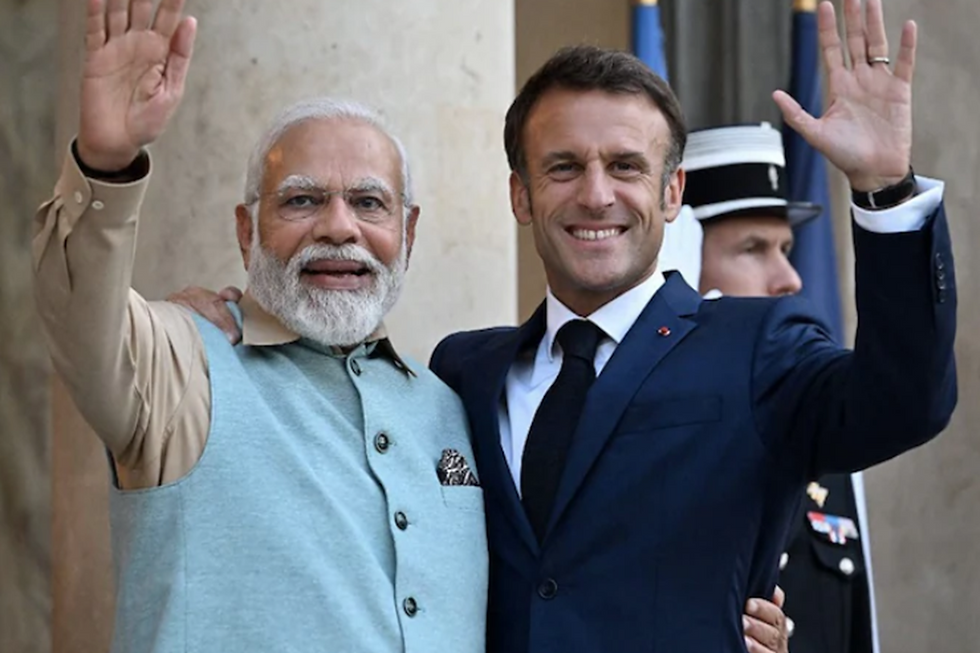
The reform traces back to the February 2026 meeting between Prime Minister Narendra Modi and French President Emmanuel Macron, where the two leaders agreed on the need to ease mobility barriers as a shared priority. Just a couple of months later, its implementation reflects the growing maturity of a partnership that increasingly rests on the movement of people, not merely the exchange of policies or strategic statements.
For decades, visa regimes have carried an undercurrent of caution. Relaxing them, even partially, signals confidence. By removing the airport transit visa requirement altogether, the French administration is recognising India as a reliable partner in global mobility systems. This feels less like a routine administrative easing and more like a deliberate gesture of trust.
The Friction That Shaped Choices
For years, Indian travellers navigated a peculiar inconvenience. Even those simply changing flights in Paris often needed a transit visa unless they met narrow exemption criteria. The result was predictable. Travellers shunned the hassle altogether.
Indian passengers frequently missed cheaper or faster connections through Paris because they lacked a transit visa, even when holding valid entry permits for countries like the United States or Canada. Airline advisories and travel forums routinely flagged this as a risk, nudging travellers elsewhere.
That “elsewhere” was often the Middle East. Transit hubs in Dubai, Doha, and Abu Dhabi became dominant because they offered predictability and easy transit procedures. No additional paperwork, fewer uncertainties, and smoother passage gradually created a structural shift in global aviation flows involving Indian passengers.
France’s decision directly addresses this long-standing friction. It simplifies the journey at a crucial point, where inconvenience often determines preference.
A Pragmatic Economic Approach
The timing of this move is no coincidence as India is projected to become the world’s third-largest outbound travel market by 2027, with spending expected to cross USD 125 billion. Indian travellers already accounted for over 27 million outbound trips in 2023, a number expected to double by 2030, as per estimates by the UN World Tourism Organisation.
These numbers reflect a rapidly expanding class of globally mobile individuals whose travel decisions shape airline routes and airport revenues. For France, easing transit norms is a strategic move within an intensely competitive aviation ecosystem. Paris competes with global hubs that have long understood the value of frictionless transit. By removing a bureaucratic hurdle, France is positioning itself as a more attractive gateway for long-haul routes connecting Europe with the Americas and Africa. Yet, this is only one, and perhaps the less significant, layer of the story.
Transit as First Contact

For many Indian travellers heading to Latin America or Africa, Paris often becomes their first physical interface with Europe, even if they never leave the airport. That fleeting experience matters more than it seems, as travel behaviour studies consistently show that a smooth transit experience can influence future destination choices. A seamless connection today can translate into a return visit tomorrow, perhaps as a tourist, a student, or even a professional.
In that sense, transit corridors emerge as instruments of soft power. They shape perception without overt messaging. They create familiarity without formal engagement. Is this facilitation or filtration? Perhaps both. By making transit easier, France is widening access while subtly positioning itself within the decision-making horizon of Indian travellers. Every passenger who passes through becomes a potential long-term connection.
The Talent Equation
The deeper logic of this policy lies in demographics. India has the world’s largest youth population, with over 65 percent below the age of 35, according to the United Nations Population Fund. This makes it one of the most significant reservoirs of global talent. France, like much of Europe, is acutely aware of this reality.
The European Commission has already identified India as a priority partner for attracting skilled professionals and students, particularly those excelling in emerging and high-demand sectors. Mobility reforms, even those that appear minor, contribute to a larger ecosystem of attraction.
France’s ambitions in this regard are clear. It aims to host 30,000 Indian students by 2030, nearly tripling current numbers under its internationalisation strategy led by Campus France. The trajectory is already visible, with Indian student numbers in France growing by over 65 percent between 2016 and 2023.
Seen in this context, the transit visa waiver becomes part of a broader narrative. It lowers psychological and procedural barriers, making France appear less distant and more accessible.
Economic Ties and Human Flows
The strengthening of mobility aligns with the expanding economic relationship between the two countries. Bilateral trade between India and France crossed EUR 13 billion in 2023, reflecting deepening interdependence. More than 10,000 French companies operate internationally with a strong presence in India, underscoring the importance of talent mobility in sustaining business linkages.
Businesses do not function in isolation from human movement. Engineers, managers, researchers, and students form the connective tissue of economic partnerships. By easing transit, France is strengthening these networks, effectively bridging the gap between aviation economics and strategic positioning.
As global supply chains evolve and talent becomes a critical resource, traditional barriers to movement are being reconsidered. Mobility liberalisation, once treated as a peripheral issue, is now central to diplomacy. Across the globe, policies like visa-free transit are quietly reshaping the architecture of international engagement.
A Quiet Investment in the Future
It is evident that the race for influence in the 21st century will be shaped by where people feel welcomed and where they encounter friction. France’s decision reflects this reality by reducing immediate inconvenience while cultivating long-term goodwill.
For Indian travellers, the benefits are immediate as it promises lower costs, fewer delays, and greater flexibility. For France, the gains are more nuanced, ranging from increased passenger flows to enhanced global positioning and a stronger foothold in the competition for talent.
This decision to relax procedural norms amounts to a quiet investment. Contemporary policy thinkers increasingly recognise that influence today is shaped not just by power or policy, but by people.


Comments