


Keeping the Door Open: The Mission Awaiting Rudra Gaurav Shresth in Türkiye
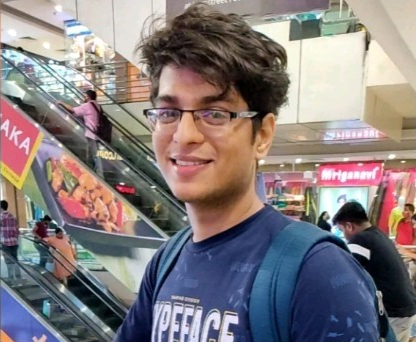
Rudra Gaurav Shresth's mission may not be to make India and Türkiye agree, but to ensure that disagreement does not become disengagement. It is a demanding assignment in an era of polarised geopolitics, but it is also the kind of assignment for which his career appears uniquely suited.

Some diplomatic journeys begin with a celebration. Others begin with the responsibility of rebuilding trust. The appointment of Rudra Gaurav Shresth as India's next Ambassador to Türkiye, announced on June 11, 2026, belongs firmly to the latter category. At a moment when India-Türkiye ties are navigating one of their most turbulent phases in recent memory, New Delhi has chosen a diplomat whose career has been forged in some of the most sensitive theatres of contemporary geopolitics.
The road from Tehran to Ankara is not merely a change of posting but a passage through the shifting fault lines of contemporary geopolitics. And that, perhaps, explains why this appointment carries significance far beyond the routine movement of diplomats.
A Career Built Across Strategic Frontiers
Rudra Gaurav Shresth, a 1999-batch Indian Foreign Service officer, brings to Ankara nearly three decades of diplomatic experience shaped by assignments across continents and political systems.
Armed with a Master's degree in Economics from the Delhi School of Economics, he belongs to a generation of diplomats who have had to navigate a world defined by overlapping crises and shifting alliances. His diplomatic footprint stretches from France and Mauritius to Afghanistan, Singapore and Bhutan. Each posting exposed him to a different dimension of statecraft: economic engagement, regional security, development partnerships and political negotiation.
His tenure as High Commissioner to Mozambique came during a period when India's outreach to Africa was expanding rapidly through maritime cooperation and development diplomacy. Later, as Deputy Chief of Mission in Bhutan, he operated at the heart of one of India's most strategically sensitive neighbourhood relationships.
Within the Ministry of External Affairs, he handled personnel management, policy planning and coordination functions. He also served as Director in the office of the Foreign Secretary, a role that provided exposure to the inner mechanics of foreign-policy formulation. Yet perhaps the most consequential chapter of his career unfolded in the Prime Minister's Office.
His years in the Prime Minister's Office gave him a front-row seat to the making of contemporary Indian statecraft. Initially appointed as Officer on Special Duty in 2020 and later elevated as Joint Secretary, Shresth served during a period marked by the COVID-19 pandemic, intensifying geopolitical rivalries and profound shifts in global power equations. Few diplomats receive such close exposure to the intersection of national security, foreign policy and executive decision-making.
Why Ankara Matters More Than Ever
Diplomacy is often tested not when interests align, but when they collide, and this observation captures the current state of India-Türkiye relations. For much of the past two decades, ties between New Delhi and Ankara remained functional despite periodic disagreements. Trade expanded, tourism grew, and both countries engaged regularly through multilateral platforms, including the G20.
But beneath the surface, political divergences steadily accumulated. Türkiye's repeated support for Pakistan's position on Jammu and Kashmir generated persistent friction, which sharpened significantly after India's Operation Sindoor in 2025 following the Pahalgam terror attack. Ankara's criticism of India's military response and its renewed support for Pakistan triggered strong reactions in New Delhi.
The strain was no longer confined to diplomatic corridors. It splilt into public consciousness, dampened tourism, and injected a degree of caution into business calculations on both sides. For New Delhi, the steady deepening of Türkiye's defence and strategic embrace of Pakistan only reinforced existing anxieties. And yet, beneath the turbulence, the foundations of engagement endured; the relationship bent, but did not break.
Even amid political strains, India-Türkiye bilateral trade has remained resilient, hovering around the USD 10-13 billion mark in recent years, reflecting that economics often retains a logic of its own even when politics becomes complicated.
The Geopolitical Equation Behind the Appointment
New Delhi's choice of envoy appears anything but accidental. In 2023, Shresth was appointed Ambassador to Iran, one of India's most strategically sensitive diplomatic stations. His tenure coincided with an exceptionally volatile period in West Asia marked by regional rivalries, shifting alignments and competing connectivity visions.
The choice of an Iran-tested diplomat for Türkiye signals that New Delhi sees the relationship not as an isolated bilateral challenge, but as part of a larger regional strategic equation. Ankara today occupies a unique geopolitical position. It is a NATO member and possesses the alliance's second-largest military establishment. Simultaneously, it seeks to project itself as an influential voice of the Global South and an autonomous regional power.
This dual identity makes Türkiye a particularly complex actor to engage, as its decisions intersect with India's interests in energy security, maritime routes, connectivity corridors, Eurasian geopolitics and West Asian stability. Understanding Türkiye, therefore, requires understanding the wider regional ecosystem in which it operates. Ambassador Shresth's recent experience in Tehran may prove especially valuable in decoding precisely those dynamics.
A Relationship Older Than Its Current Disagreements
Long before modern diplomacy, merchants, scholars and travellers moved between the Indian subcontinent and the Ottoman world. Today's political disagreements are real, but they exist against a much older backdrop of civilizational contact and commercial exchange. History does not erase contemporary disputes. It does, however, provide perspective.
India and Türkiye are among the few major emerging economies that straddle Europe, Asia and the Middle East while sharing a seat at the G20 table. Both leverage their strategic geography to project influence beyond their immediate neighbourhoods and aspire to play a larger role in shaping the emerging international order.
Diplomacy, after all, exists precisely because countries often need to cooperate with those with whom they disagree.
What Will Be Expected from India's New Envoy?
Few observers expect dramatic breakthroughs as the structural differences between New Delhi and Ankara are unlikely to disappear overnight. Their positions on several geopolitical questions remain fundamentally different.
Shresth's mission will therefore be measured less by headline-grabbing achievements and more by sustained strategic management. The first task will be preserving channels of communication. Difficult relationships require more diplomacy, not less. History shows that estranged nations rarely reconcile through grand gestures; they do so through patient engagement, sustained dialogue and the quiet work of diplomacy.
The second will be safeguarding India's strategic interests by closely tracking developments in Türkiye-Pakistan cooperation while ensuring India's concerns are clearly articulated to Turkish policymakers.
The third will involve protecting and expanding areas where cooperation remains possible. Trade, investment, aviation and business ties continue to act as stabilising anchors in the relationship. Here, Shresth's economics background could prove particularly valuable, as economic interests often outlast political turbulence.
At a broader level, his assessments from Ankara will likely contribute to India's understanding of developments across West Asia, Eurasia and the Mediterranean, regions whose strategic futures are becoming interconnected.
The Diplomacy of Strategic Patience
The objective before India may not be to transform Türkiye into a close strategic partner. The immediate challenge is more subtle and arguably more important: preventing further deterioration while preserving room for future engagement.
A veteran diplomat once remarked that diplomacy is the art of keeping a door open even when neither side wishes to walk through it. That observation perhaps captures the essence of India's current challenge in Türkiye.
Rudra Gaurav Shresth's mission may not be to make India and Türkiye agree, but to ensure that disagreement does not become disengagement. It is a demanding assignment in an era of polarised geopolitics, but it is also the kind of assignment for which his career appears uniquely suited.
In diplomacy, as in history, the relationships that survive periods of strain are often the ones that matter most. For India and Türkiye, the challenge ahead is not merely to navigate differences but to prevent those differences from defining the entire relationship.


Comments