


PM Modi Netherlands Visit 2026: Charting a Blueprint for the Post-Globalisation World
- Joydeep Chakraborty
- May 17
- 6 min read
Updated: May 18
Prime Minister Narendra Modi’s visit to the Netherlands marks a moment where diplomacy becomes design, creating new frameworks that can withstand technological disruption and geopolitical uncertainty. From semiconductors that define digital sovereignty to water systems that define climate survival, the partnership spans both the future and the fundamentals. It connects ports to people, and innovation to identity.

Between the wind-brushed canals of the Netherlands and the rising ambitions of India, a dynamic partnership took shape in The Hague. This was a rare moment where technology and tradition walked side by side through the corridors of diplomacy, reshaping how two democracies see progress and possibility.
From ancient Chola inscriptions to cutting-edge semiconductors, this journey spanned a thousand years in a single diplomatic frame. What unfolded in The Hague was not ceremonial diplomacy in its usual rhythm, but a structured recalibration of priorities in a world where supply chains, data, and trust now define global influence.
PM Modi Netherlands Visit 2026 elevated ties into a full Strategic Partnership, signalling a shift from episodic cooperation to long-term systems alignment between India and the Netherlands.
A Partnership Rewritten by Technology and Time
The elevation of ties in The Hague reflected a shared recognition that globalisation is no longer frictionless, but is shaped through negotiations, often contested, and increasingly dependent on trusted partnerships. In this evolving order, India and the Netherlands positioned themselves as complementary actors rather than distant collaborators.
Prime Minister Narendra Modi and Dutch Prime Minister Rob Jetten focused on emerging realities such as technological sovereignty, climate stress, and supply chain resilience. The outcome was a comprehensive roadmap supported by 14 agreements spanning trade, water, semiconductors, maritime logistics, and digital innovation.
Nearly one-fifth of India’s exports to the European Union pass through Dutch ports, underscoring the Netherlands’ role as a quiet but critical gateway to Europe. Trade between the two sides has already crossed USD 25 billion, while Dutch investment in India is estimated at over USD 45 billion across sectors ranging from energy to engineering, nudging the relationship beyond its ceremonial contours into something more structurally and architecturally intertwined.
Semiconductors at the Center of a New Geopolitics

If there is a single axis around which this partnership turns, it is semiconductors. The agreement involving ASML and Tata Electronics to support India’s first front-end fabrication facility in Dholera marks a structural shift in India’s industrial trajectory.
ASML, headquartered in Veldhoven, is the only company in the world producing extreme ultraviolet lithography systems, the machines that make advanced chips below 7 nanometres possible. These systems sit at the very heart of global technology competition, shaping everything from artificial intelligence to defence systems.
The geopolitical weight of this collaboration is difficult to overstate, as export restrictions on ASML’s most advanced systems to certain countries reflect how chipmaking equipment has become a strategic asset in its own right. Its engagement with India signals both diversification and trust in a shifting technological map.
India has already approved semiconductor projects across Gujarat, Assam, and Uttar Pradesh ecosystems under its national mission, aiming to build end-to-end chip capability for the first time. The Dholera project becomes not just an industrial milestone but a statement of intent in a world where computing power is paramount. Technology and tradition walked side by side through this partnership, but here, technology quietly took the lead.
Water, Climate, and Engineering the Future
One of the most distinctive dimensions of India–Netherlands cooperation lies in water management, where engineering ushers in survival. The Netherlands, much of which lies below sea level, has turned hydraulic engineering into a national philosophy.

Prime Minister Narendra Modi’s visit to the Afsluitdijk, a 32-kilometre-long barrier protecting large parts of the Dutch coastline, reflected a shared vulnerability between two climate-exposed nations and a willingness to design against uncertainty.
The Netherlands brings centuries of expertise in flood control and coastal resilience, while India brings scale, urgency, and diverse ecological challenges. Together, this creates a laboratory for climate innovation.
The Letter of Intent between India’s Ministry of Jal Shakti and the Dutch Ministry of Infrastructure and Water Management formalises cooperation in climate-resilient infrastructure and also connects directly to India’s ambitious Kalpasar project in Gujarat, envisioned as a massive freshwater reservoir and multi-use infrastructure system.
Trade Routes, Ports, and the Quiet Power of Rotterdam
Global power often hides in infrastructure, and few places illustrate this better than the Port of Rotterdam, Europe’s largest seaport. This mammoth of a port handles over 450 million tonnes of cargo annually and functions as a logistical heart for continental trade.
For India, this port is not just a stop in a supply chain but a crucial hinge. Nearly one-fifth of India’s exports to the European Union move through Dutch logistics networks, making the Netherlands an essential economic corridor rather than a distant partner.
Maritime cooperation during the visit focused on green shipping, digital logistics, and clean energy transitions. For India, this aligns with the need to ease pressure on its shipping industry, which is increasingly challenged by the demand to decarbonise while still maintaining speed and scale.
Dutch companies such as Damen Shipyards, KLM Royal Dutch Airlines, and major players in energy and logistics brought significant industry depth to the discussions. The engagement reflects a broader shift in India’s positioning, from being viewed primarily as a consumer market to emerging as a production and innovation ecosystem.
Diaspora Bridges and Cultural Memory
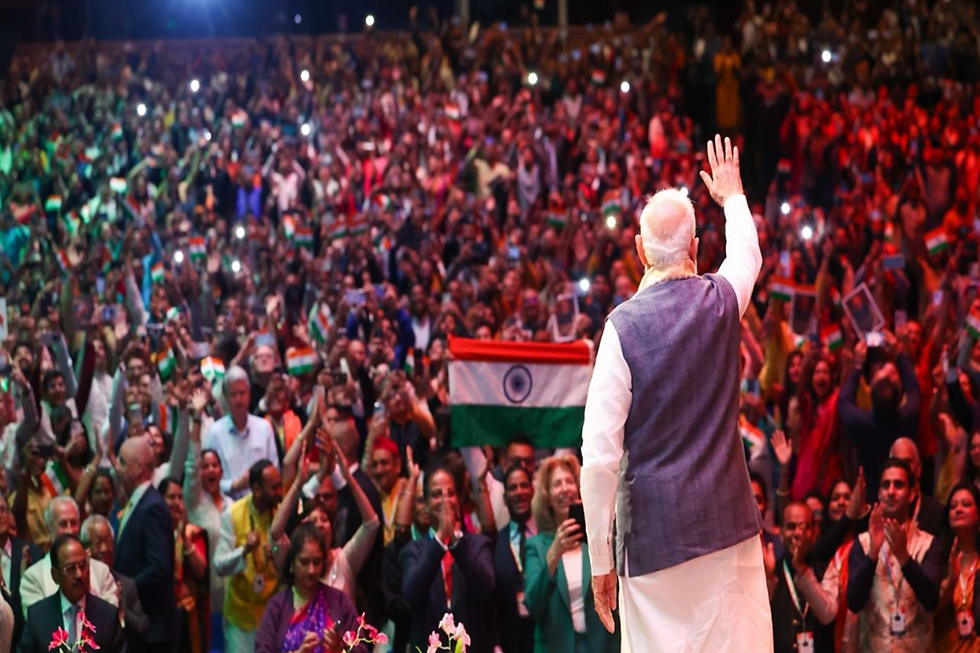
Economic and technological alignment alone does not sustain partnerships. People do. The Indian-origin community in the Netherlands carries a layered history. A significant portion traces its roots to contract labour migration from British India to Suriname in the 19th and early 20th centuries. After Suriname’s independence in 1975, many relocated to the Netherlands, forming today’s Surinami-Hindustani community.
Today, this community numbers around 200,000 people and is deeply embedded in Dutch economic and cultural life. It stands as one of the largest Indian diasporic groups in mainland Europe. Their journey is not just migratory history but lived diplomacy. From public service to entrepreneurship, they function as cultural translators between two worlds, shaping perception and policy in subtle but lasting ways.

The restitution of the 11th-century Chola Copper Plates by Leiden University Library added another layer to this narrative. These inscriptions, carrying Tamil and Sanskrit records of royal governance, returned to India as symbols of historical continuity rather than mere artefacts. The India-Netherlands partnership reflects a shift from transactional diplomacy to systems-level interdependence.
A Strategic Partnership in a Fragmenting World
The global order today is marked by fragmentation rather than cohesion. Supply chains are being restructured, and technology is being reclassified as strategic infrastructure. Climate volatility is reshaping national priorities. In this context, the India–Netherlands Strategic Partnership is emerging as a prototype.
By aligning on semiconductors, clean energy, maritime logistics, and water resilience, both countries are responding to the same global pressures from different starting points, where one brings scale and demand, and the other brings precision and systems expertise.
The presence of firms like ASML, the role of Dutch ports, and India’s expanding manufacturing ecosystem together create a dense mesh of cooperation. Even cultural diplomacy and diaspora engagement feed into this structure, reinforcing the idea that modern partnerships are not only built in boardrooms, but also in libraries, ports, universities, and communities.
Itinerary of PM Modi Netherlands Visit 2026 at a Glance
The two-day engagement in The Hague and nearby regions brought together high-level diplomacy, business outreach, cultural exchange, and diaspora interaction in a tightly woven diplomatic schedule.
The visit began with official talks at Catshuis, where Prime Minister Narendra Modi met Prime Minister Rob Jetten. Their discussions elevated India–Netherlands relations to a Strategic Partnership, supported by a comprehensive roadmap covering trade, defence, semiconductors, renewable energy, maritime cooperation, and water management. Fourteen agreements and MoUs were signed, including cooperation in Water, Agriculture and Health (WAH), critical minerals, and supply chain resilience.

Business engagement formed a key pillar of the visit. Prime Ministers Narendra Modi and Rob Jetten interacted with leading Dutch CEOs, where strong interest was expressed in expanding investments into India’s infrastructure, clean energy, and advanced manufacturing sectors. A landmark moment came with the ASML–Tata Electronics agreement, aimed at supporting India’s first semiconductor fabrication facility in Gujarat.
Cultural diplomacy also featured prominently. The Leiden University Library returned the 11th-century Chola Copper Plates to India, underscoring deep civilisational linkages. Prime Minister Narendra Modi also met King Willem-Alexander and Queen Máxima, with discussions focused on education, innovation, and green initiatives. He further visited the Afsluitdijk water management structure, reinforcing cooperation on climate resilience and India’s Kalpasar project.
The visit concluded with a vibrant diaspora interaction in The Hague, where Prime Minister Narendra Modi appreciated the contributions of the Indian community and announced expanded OCI eligibility for the Surinamese-Hindustani community. Overall, the itinerary reflected a multidimensional partnership spanning diplomacy, business, culture, and people-to-people ties.
A Partnership Built for the Next Economy

Prime Minister Narendra Modi’s visit to the Netherlands marks a moment where diplomacy becomes design, creating new frameworks that can withstand technological disruption and geopolitical uncertainty.
From semiconductors that define digital sovereignty to water systems that define climate survival, the partnership spans both the future and the fundamentals. It connects ports to people, and innovation to identity.
In a divergent world, such partnerships offer a rare form of predictability grounded in trust and ambition, and provide a glimpse into how international cooperation may be rewritten in the decades to come.


Comments