


From Brasília to Bharat: Lula da Silva's India Visit Ushers a New Era for the Global South

Updated: Feb 24
Like a duet between samba drums and classical ragas, this partnership carries rhythm and resonance.
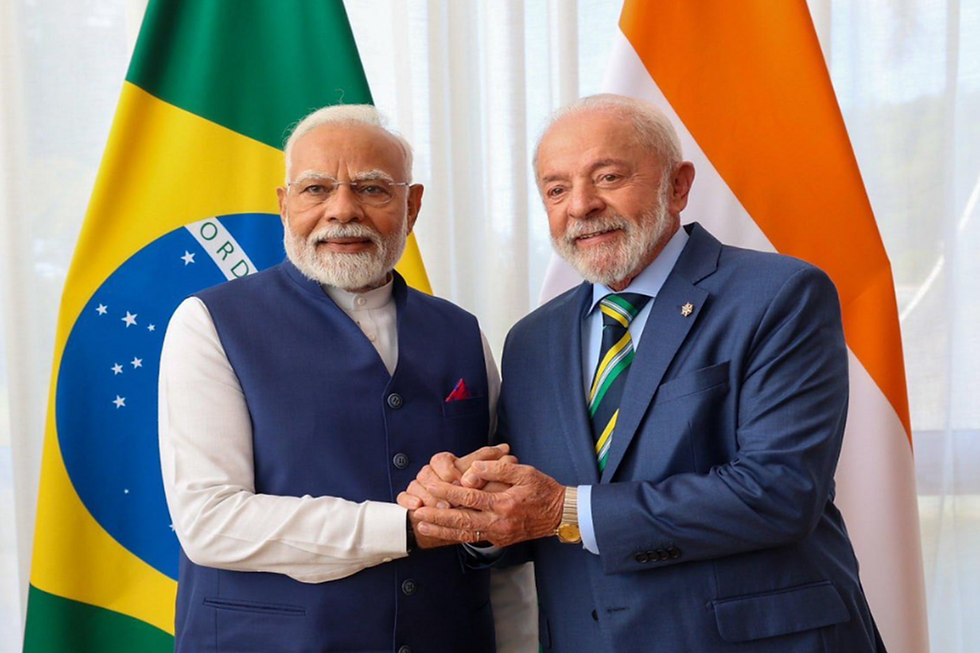
When economies representing nearly 1.7 billion people deepen ties, the ripple effects extend far beyond bilateral trade, as they reshape continents. From 18–22 February 2026, President Luiz Inácio Lula da Silva embarks on a State Visit to India at the invitation of Prime Minister Narendra Modi. Beyond protocol, this visit signals a strategic recalibration in technology, trade, and global diplomacy.
A defining feature of the trip is President Lula’s participation in the AI Impact Summit in New Delhi from 19 to 20 February. Brazil’s interest in India’s Digital Public Infrastructure (DPI) model reflects a broader ambition: harnessing technology as a bridge for innovation across continents. The visit culminates in bilateral talks on 21 February, where the leaders are expected to set an ambitious agenda across trade, defence, health, and climate cooperation.
A Partnership Built on Symbolic Moments and Shared Vision
India–Brazil ties are anchored in symbolic yet consequential diplomatic milestones. When President Lula attended India’s Republic Day celebrations in 2004 as Chief Guest, it marked Brazil’s early recognition of India as a key Global South partner. Two decades later, Prime Minister Modi’s State Visit to Brasília in July 2025, the first by an Indian Prime Minister in 57 years, revitalised high-level engagement. Their coordination during successive G20 summits demonstrated continuity in pushing development-centric priorities for emerging economies.
If politics provides the foundation, trade and investment are the engines powering this partnership. India–Brazil bilateral trade crossed USD 15–16 billion in recent years, making Brazil India’s largest trading partner in Latin America. Yet both governments acknowledge untapped potential, with efforts underway to expand the India–MERCOSUR Preferential Trade Agreement to widen market access and reduce tariffs. Brazil alone accounts for nearly one-third of India’s total trade with the LAC region, highlighting its centrality in India’s Latin American strategy.
Trade Beyond Numbers: From Farms to Energy Security
Beyond official statistics, the India–Brazil relationship affects everyday life. A significant portion of soybean oil consumed in Indian kitchens originates from Brazilian farms, linking South American agriculture to Indian households. Brazilian crude oil exports contribute to diversifying India’s energy basket, reducing overdependence on traditional suppliers.
Brazil supplies India with agricultural commodities, crude oil, and minerals, while India exports pharmaceuticals, automobiles, machinery, chemicals, and refined petroleum products. With bilateral trade steadily growing, the relationship increasingly moves from transactional exchanges toward strategic industrial cooperation. The upcoming visit is accompanied by the largest-ever Brazilian delegation to India, over 300 business leaders and 14 ministers, signalling unprecedented commercial interest.
Technology and AI: The New Frontier
Like a duet between samba drums and classical ragas, India and Brazil are orchestrating a new rhythm in technology collaboration. President Lula’s participation in the AI Impact Summit signals Brazil’s intent to tap into India’s AI and digital governance expertise. Cooperation is expected to extend to space research, biotechnology, renewable energy, and critical minerals, where Brazil’s lithium, niobium, and rare earth reserves hold strategic value for advanced manufacturing and clean energy transitions.
In aerospace, India’s Adani Defence & Aerospace and Brazilian giant Embraer may explore joint manufacturing of regional transport aircraft. This represents a shift from commodity-driven trade to high-value industrial partnerships, signalling that technology and innovation are central to the bilateral narrative.
Health, Energy, and the Human Dimension
The India–Brazil partnership proved its resilience during the COVID-19 pandemic. Indian pharmaceutical supplies, including vaccines and affordable generics, reached Brazilian hospitals at scale, reinforcing India’s image as a dependable health partner. Brazil’s expansive public healthcare system relies significantly on cost-effective medicines; this is an area where Indian firms have established a growing presence. Future agreements are expected to strengthen supply chains and regulatory coordination in health.
Energy cooperation spans conventional fuels, renewables, and biofuels. Brazil’s leadership in ethanol and biofuel production complements India’s solar expansion. Collaborative efforts in sustainable agriculture, climate finance, and food security highlight shared priorities in addressing global challenges. In a century defined by climate anxieties, cooperation between two biodiversity giants assumes global significance.
Strategic Engagement and Defence Cooperation
If the 20th century was defined by North Atlantic dominance, partnerships like India and Brazil may well define the 21st. Strategic dialogues now encompass defence cooperation and maritime security.
With long coastlines and shared maritime interests, both nations are exploring joint research initiatives, technology-sharing arrangements, and coordination within multilateral platforms. This reinforces their advocacy for reforms in global financial institutions and a more representative international order, amplifying the voice of the Global South.
People-to-People Ties: From Visas to Cultural Exchange
Beyond trade and defence, the human dimension is receiving renewed attention. Brazil is expected to announce a 10-year multiple-entry visa for Indian tourists and ease business visa norms. These measures would significantly enhance long-term travel, cultural exchange, and professional mobility. As people-to-people ties grow, so does the social foundation of the partnership, reinforcing its resilience and depth.
As two diverse, populous democracies, India and Brazil are increasingly positioned as architects of global governance. Their partnership reflects a commitment to multipolarity, equitable growth, and reform of international institutions. The visit offers a platform to consolidate gains across trade, technology, health, energy, and defence while institutionalising mechanisms for sustained collaboration.
If politics and economics provide the pillars, shared values, strategic vision, and innovative collaboration form the roof. The rhythm of their engagement, from historical milestones to modern AI summits, demonstrates a relationship evolving from cordial diplomacy to forward-looking strategic alignment.

A Partnership with Global Resonance
As President Lula touches down in New Delhi, the partnership carries a resonance far beyond bilateral corridors. Like the interwoven beats of samba and Indian classical music, India and Brazil are crafting a symphony with global impact. In a world craving multipolar balance, their dialogue, representing nearly one-fifth of humanity, reminds us that the future of international relations may increasingly be shaped by the Global South, not just the North Atlantic powers.
The 2026 visit is more than ceremonial. It is a statement that when two giants collaborate, the ripple effects are felt in kitchens, hospitals, energy grids, and boardrooms worldwide. And as this partnership deepens, one question lingers: could India and Brazil define what global governance looks like in the 21st century?


Comments