


From Paris to the G7: How India is Steering the Conversation at the French Ambassadors’ Conference

In a room packed with nearly 180 of France’s top diplomats, Dr. S Jaishankar’s words cut through the usual diplomatic cadence. His address mirrored the dilemmas Europe itself is confronting like trade shifts, energy security, and a rapidly changing global order, while signaling that India is no longer just a bystander, but a strategic architect in shaping international partnerships.
A Rare Spotlight on India in French Diplomacy
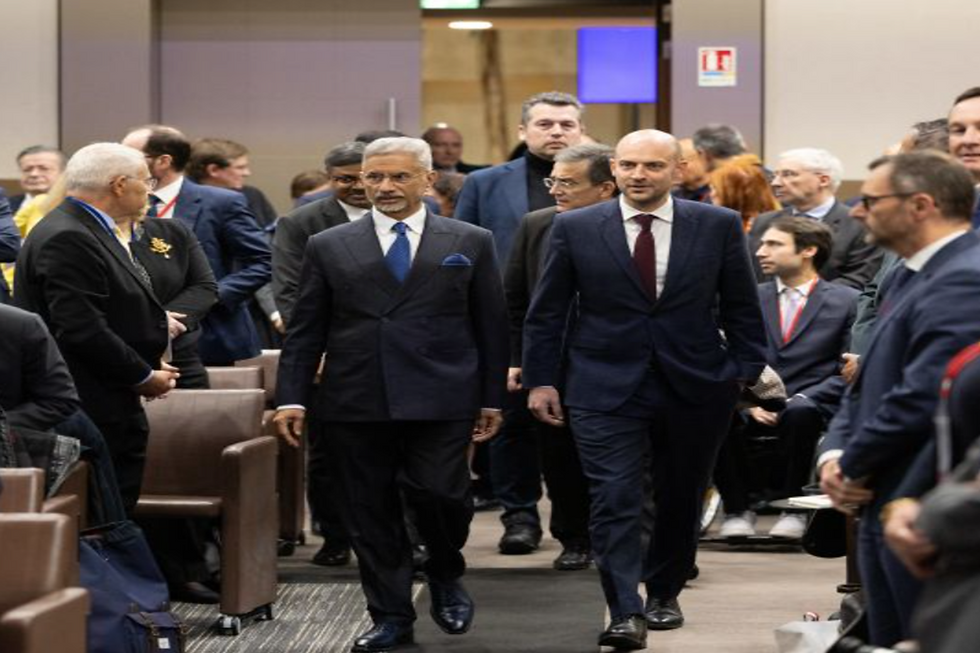
Dr. S. Jaishankar, India’s External Affairs Minister, participated as Guest of Honour in the 31st Annual French Ambassadors’ Conference on 8–9 January 2026. The event, held in Paris, is a cornerstone of French foreign-policy architecture. Established in the early 1990s, the Conference brings together nearly 180 ambassadors and senior envoys for strategic consultations with the French President, Prime Minister, and Minister for Europe and Foreign Affairs.
Over decades, it has been where France navigates global shocks ranging from the post-Cold War order to climate diplomacy and financial crises. Jaishankar’s presence marked not just ceremonial recognition but a deepening acknowledgement of India’s growing weight in European strategic thinking.
Global Uncertainty: A Stage for Shared Challenges
The 31st edition of the Conference, themed “Assertion and impact: a diplomacy in the service of the French people,” unfolded against a backdrop of global volatility. Ambassadors debated migration, drug trafficking, defence, and the fight against information manipulation, while exploring ways to renew partnerships and finance international solidarity.
Here, Jaishankar’s address did not merely echo French priorities but reframed them through an external lens. By highlighting shifts in trade, technology, energy, and connectivity, he underscored the shared challenges of multipolarity and strategic autonomy. Beyond the conference hall, a flurry of high-level engagements reinforced the sense that this was not a symbolic visit, but a working moment in a deepening strategic partnership.

Diplomacy Beyond the Podium
The Conference address was only one part of a tightly choreographed diplomatic schedule, with meetings unfolding back-to-back across Paris. This was an indication that this visit was less about ceremony and more about coordination in a rapidly shifting global landscape. Jaishankar met French President Emmanuel Macron, conveyed warm greetings from Prime Minister Narendra Modi, and discussed the positive trajectory of bilateral ties. Macron reaffirmed the strength of the partnership and announced his planned visit to India for the forthcoming AI Impact Summit.
On 8 January, Jaishankar held talks with French Foreign Minister Jean-Noël Barrot, focusing on advancing India–EU cooperation. He also participated in the first India–Weimar format meeting, adding a quiet but telling dimension to the visit by placing India alongside core European voices in discussions traditionally confined to intra-European coordination.
Strategic Partnerships in a Multipolar World
Jaishankar’s message resonated deeply with European concerns. By emphasizing India’s commitment to a multipolar order and strategic autonomy, he reinforced the value of robust partnerships amid uncertainty. This was more than political rhetoric as it reflected India’s consistent approach to diplomacy, where every platform is an opportunity to display both foresight and restraint.
India uses every podium to display its rich diplomatic heritage, acting as a steady and circumspect partner in the minefield of geopolitics, where one misstep can trigger great havoc. In Paris, this approach was on full display, signaling to Europe that India is a reliable interlocutor in shaping rules and norms for a rapidly transforming global landscape.
France’s G7 Presidency: India’s Emerging Role
France’s upcoming G7 presidency framed much of the conversation. Paris aims to prioritize economic resilience, energy security, climate action, technology governance, and global institutional reforms. Though India is not a G7 member, it occupies an increasingly central role in French strategic thinking. Seen as a vital bridge to the Global South, India is well positioned to influence discussions on climate transitions, digital public infrastructure, and supply-chain diversification.
Jaishankar’s engagement ensures that India’s perspective will shape G7 deliberations through outreach mechanisms and issue-based partnerships. In doing so, India is quietly carving a role as a stabilizing partner in an unpredictable international order, proving that influence does not always require formal membership.
The Broader Significance of Jaishankar’s Visit
Overall, the 31st Annual French Ambassadors’ Conference was a stage for India’s diplomacy in action. The visit underscored the depth of trust between India and France, highlighted India’s rising global stature, and embedded bilateral cooperation within wider debates on the future of global diplomacy.
Beyond the formalities, the visit reflected a broader strategic message: India is a partner capable of providing clarity in uncertain times, offering perspectives grounded in experience, prudence, and an acute awareness of the interconnected global order.
A Moment of Reflection: Towards Multipolar Cooperation
As France prepares to steer the G7 through uncertain waters, India’s imprint on the dialogue underscores a world moving steadily toward multipolar cooperation. Jaishankar’s Paris engagements serve as a reminder that strategic partnerships today are about more than symbolism. They are about shared vision, coordinated action, and the foresight to navigate an era defined by complexity and flux.
In the end, this visit demonstrates that India is not merely an observer of global change but an architect of it, contributing both steadiness and strategic imagination at every turn.


Comments