


Restless Oceans, Rising Stakes: Why the India–France Maritime Partnership Matters

The 8th India–France Maritime Cooperation Dialogue reflects the evolution of a partnership that sees the oceans not merely as channels of commerce, but as arenas where the rules, resilience and balance of the new global order will be decided.

Oceans, once imagined as connectors of civilisations, today have emerged as theatres of competition, caution and strategic calculation. In an age obsessed with borders, it is the seas that are discreetly deciding the balance of power. Against this unsettled backdrop, the 8th India–France Maritime Cooperation Dialogue held in Paris on May 20, 2026, carries a wider significance than many other diplomatic meetings.
When Oceans Become Geopolitical Arenas
The dialogue brought together Pavan Kapoor, Deputy National Security Advisor of India’s National Security Council Secretariat, Guillaume Ollagnier, Director General for International Relations and Strategy at France’s Ministry for the Armed Forces, and Claire Raulin, Director for Strategic Affairs, Security and Disarmament at the French Ministry of Europe and Foreign Affairs, on one table. Their agenda was multidimensional, ranging from piracy and maritime terrorism to narcotics trafficking, Illegal, unreported, and unregulated fishing, armed robbery at sea and emerging hybrid threats.
These discussions, though appearing strictly technical, are anything but. Nearly 80 percent of global maritime oil trade and about one-third of global bulk cargo traffic move through the Indian Ocean. Every disrupted chokepoint is a reminder that modern prosperity floats on vulnerable waters.
For India, the stakes are deeply personal. About 95 percent of India’s trade by volume and nearly 70 percent by value travels through maritime routes. Sea lane security is not an abstract strategic concern for New Delhi. It is closely tied to the country’s energy imports, industrial supply chains, export competitiveness and everyday economic stability.
France comprehends India's maritime reality through a different but equally compelling lens. It is the only European nation with sovereign territories in both the Indian and Pacific Oceans. From Réunion and Mayotte to French Polynesia and New Caledonia, France’s Indo-Pacific footprint is permanent, not observational.
The geography carries undeniable weight. France possesses the world’s second-largest Exclusive Economic Zone, much of it concentrated in the Indo-Pacific, and maintains roughly 7,000 military personnel across the theatre. When Paris speaks of a free, open and rules-based Indo-Pacific, it does so not as a distant observer, but as a resident power with enduring stakes in the region.
From Strategic Partnership to Maritime Trust
The roots of this cooperation stretch back to the India–France Strategic Partnership established in 1998. Over time, defence collaboration, civil nuclear cooperation and space engagement created a reservoir of political trust. As the Indo-Pacific rose to the centre of global geopolitics, maritime security naturally moved from the periphery to the core of bilateral ties.
History stands as testament to how nations that mastered the seas often shaped the political destiny of their age. Today, maritime diplomacy is emerging as a central instrument of geopolitical statecraft.
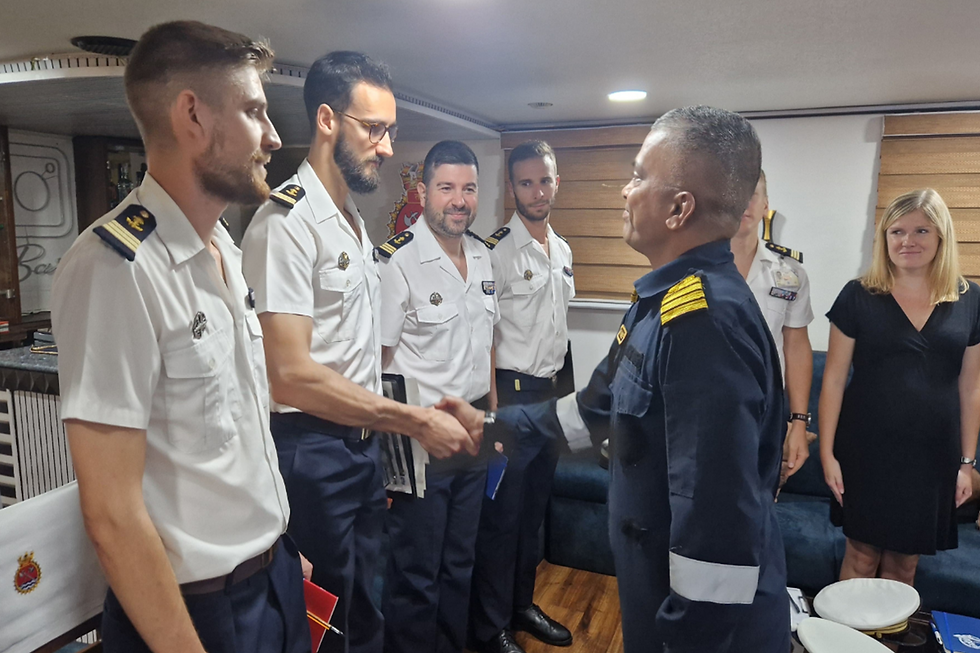
One of the most eminent examples of this evolution is the Varuna naval exercise. Initiated in 2001, Varuna remains among India’s most advanced bilateral naval exercises. Despite beginning as a modest conventional naval engagement, it has matured into complex operational coordination involving aircraft carriers, submarines and advanced maritime warfare scenarios.
The long-running Varuna exercise illustrates how India and France have steadily built habits of coordination, operational familiarity and strategic trust. The Maritime Cooperation Dialogue fits into this broader architecture, having evolved into a structured platform for aligning policy priorities and deepening cooperation in a maritime environment that is becoming increasingly crowded and contested.
China’s Expanding Footprint and the Indo-Pacific Equation
The contemporary relevance of the dialogue cannot be separated from the changing strategic landscape of the Indo-Pacific. The region today accounts for roughly 60 percent of global GDP and around two-thirds of global economic growth. Policy experts adhere to one rule: Whoever influences its sea lanes influences the economic bloodstream of the twenty-first century.
China’s expanding maritime presence looms large within this equation.
Beijing’s growing naval deployments across the Indian Ocean Region have altered strategic calculations, and its port-linked engagements from Gwadar in Pakistan to Hambantota in Sri Lanka, combined with wider Belt and Road maritime ambitions, have expanded its operational reach by leaps and bounds.
A particularly symbolic turning point came in 2017 when China established its first overseas military base in Djibouti. Located near the Bab-el-Mandeb chokepoint connecting the Red Sea and Gulf of Aden, the base signalled Beijing’s evolution from a continental power with maritime interests into a globally active naval actor with expeditionary ambitions. For India and France, both deeply invested in Indian Ocean stability, such developments reinforce the value of sustained maritime coordination.
Neither New Delhi nor Paris frames their cooperation as an alliance directed against a single country. This distinction reassures that the two countries prize strategic autonomy and maintain independent foreign policy traditions. Yet their concerns visibly converge around preserving freedom of navigation, maritime governance, territorial sovereignty and a balanced regional order.
For India and France, a rules-based Indo-Pacific translates to supply chain resilience, secure shipping corridors and the management of power transitions without allowing maritime competition to slide into unchecked instability.
West Asia’s Fires and the Fragility of Global Shipping
The strategic importance of the 8th Maritime Dialogue also becomes clearer when viewed through the turbulence unfolding in West Asia.
Recent tensions involving Iran, the United States and regional actors have underscored how maritime security can no longer be compartmentalised into neat regional boxes. A crisis in one waterway can ripple across oceans, commodity markets and supply chains.
The Persian Gulf, the Strait of Hormuz, the Red Sea, and the Arabian Sea are connected arteries within a shared maritime system and disruption in one corridor rarely stays local.
Recent instability in the Red Sea shipping corridor offered a vivid demonstration. Several commercial vessels rerouted around the Cape of Good Hope to avoid security risks. The detours increased voyage times by roughly 10 to 15 days and pushed freight costs upward across global markets.
For India, heavily dependent on Gulf energy imports and maritime commerce, such disruptions carry immediate economic implications. France, too, weilds deep diplomatic, military and commercial interests in West Asia. Hence, both countries view maritime crisis management through a wider geopolitical lens.
Experts in both Raisina Hill and the Élysée understand that in an era of geopolitical shocks, strategic conversations cannot wait for crises to erupt. Mechanisms such as the India–France Maritime Cooperation Dialogue create vital channels for assessment-sharing, policy coordination and regular consultations that strengthen resilience when maritime volatility intensifies.
A “Special Global Strategic Partnership” for an Uncertain World

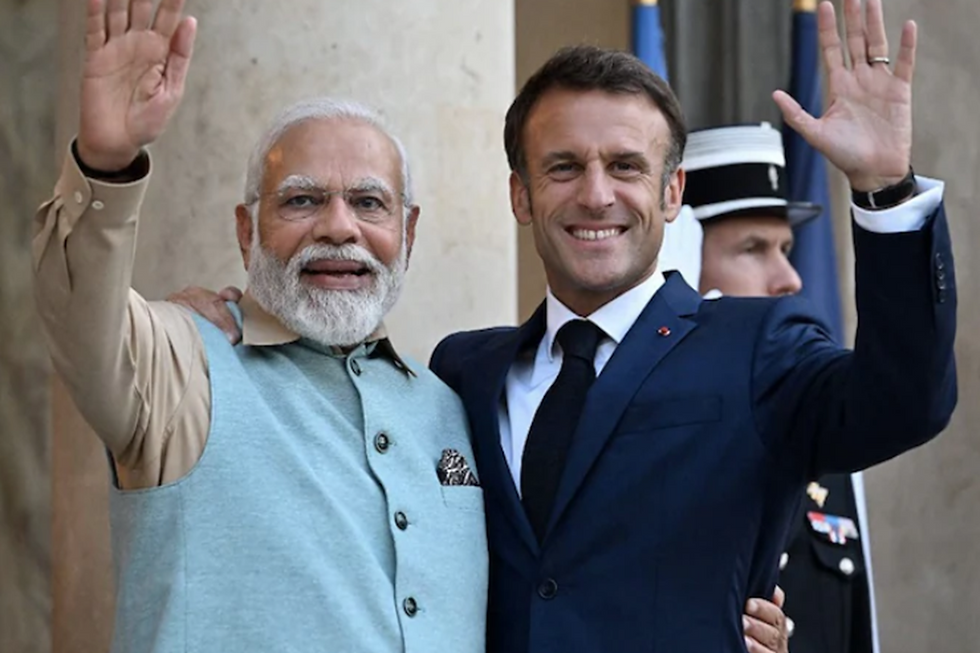
The maritime dialogue also reflects the broader elevation of India–France relations. During French President Emmanuel Macron’s visit to India in February 2026, Prime Minister Narendra Modi and President Macron upgraded bilateral ties to a “Special Global Strategic Partnership”, signalling that Indo-French ambitions now extend far beyond traditional defence cooperation into technology, innovation, geopolitical coordination and global governance.
The recent Paris dialogue reviewed outcomes from the January 2026 Strategic Dialogue between National Security Advisers Ajit Doval and Emmanuel Bonne, while carrying forward understandings emerging from the Modi–Macron summit.
This widening agenda reflects a deeper reality about the emerging global order, as oceans remain restless, the challenge for states is to ensure that cooperation keeps pace with the tide. The value of maritime dialogues today extends well beyond naval coordination. They are institutional tools for navigating a world marked by great-power rivalry, fragile supply chains, contested sea lanes, transnational crime and regional conflict.
For India, France offers a dependable European partner willing to engage on relatively equal strategic terms while respecting India’s preference for strategic autonomy. For France, India represents an indispensable Indo-Pacific actor whose growing influence matters to regional stability and multipolarity.
The 8th India–France Maritime Cooperation Dialogue reflects the evolution of a partnership that sees the oceans not merely as channels of commerce, but as arenas where the rules, resilience and balance of the new global order will be decided.


Comments