


India and Canada: The Price of Trust, the Promise of Renewal

For India, Canada offers opportunities in energy, agriculture, critical resources and advanced technology. Canadian businesses, meanwhile, can benefit from India’s expanding consumer market and growing demand for industrial investment.

Sovereignty is not negotiable. Neither is the cost of diplomatic self-sabotage. India and Canada have spent much of the past two years discovering how quickly political distrust can damage a relationship built over decades, disrupting diplomatic engagement while leaving enormous economic opportunities untapped. Prime Minister Narendra Modi’s proposed December visit to Canada offers both countries a chance to reverse that damage, but the real test will be whether renewed goodwill can withstand the next disagreement.
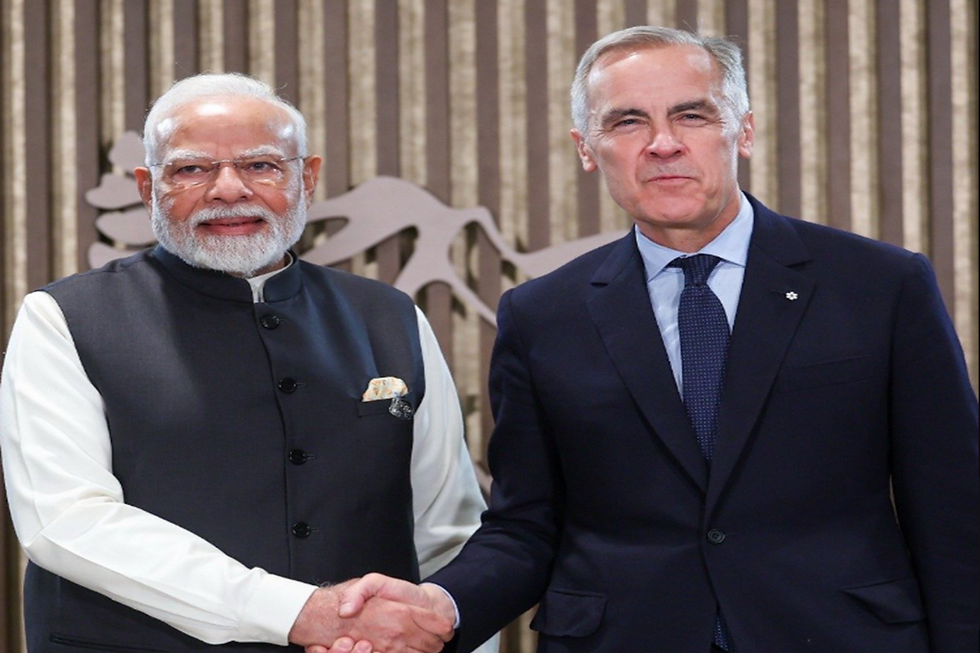
The signs of recovery are encouraging. Canadian Prime Minister Mark Carney and Modi have revived high-level engagement, negotiations for a Comprehensive Economic Partnership Agreement (CEPA) have advanced, and security cooperation has returned to the diplomatic agenda. With bilateral trade targeted to double by 2030, the two governments have compelling reasons to move forward. Yet, reconciliation will remain fragile unless political understanding translates into institutional trust and measurable economic gains.
From Diplomatic Rupture to a Calculated Reset
The rupture following the killing of Khalistan separatist Hardeep Singh Nijjar in Canada in 2023 exposed the vulnerabilities of India-Canada relations. Then Prime Minister Justin Trudeau alleged a potential Indian link to the killing, an allegation New Delhi rejected as absurd. In October 2024, India recalled its High Commissioner, Sanjay Kumar Verma, and five other diplomats after Ottawa sought to implicate them in the case. India subsequently expelled an equal number of Canadian diplomats, deepening a crisis that neither country’s economic interests could afford indefinitely.
The episode revealed a difficult truth about modern diplomacy. Extensive commercial connections and a sizeable diaspora cannot insulate bilateral relations from political confrontation when questions of sovereignty and national security enter the equation. For New Delhi, the allegations raised concerns about the treatment of its officials and Canada’s handling of separatist activity. For Ottawa, the investigation implicated questions of public safety and the integrity of its institutions. Any durable reset must acknowledge these competing concerns without allowing accusation to become a permanent substitute for evidence and dialogue.
Carney’s election victory in April 2025 created an opportunity to change the relationship’s direction. Modi’s participation in the G7 Summit at Kananaskis, following an invitation from Carney, helped restore political contact, with both sides agreeing to reinstate their respective High Commissioners. Carney’s subsequent visit to India in March 2026 added momentum to the process, suggesting that both governments had begun to recognise the geopolitical and economic costs of prolonged estrangement.
Political leadership has clearly helped reopen the door, but diplomacy cannot depend indefinitely on personal chemistry. The challenge is to ensure that officials, security agencies and commercial institutions can continue working together even when the two prime ministers disagree. A relationship that functions only when leaders are on good terms remains vulnerable to the next political storm.
The Uranium Deal Offers A Practical Lesson
Carney’s visit to India in early 2026 illustrated what diplomatic normalisation can unlock when political intent meets commercial purpose. Accompanied by senior officials and business leaders, he arrived with an agenda that extended beyond repairing bilateral relations. The CAD 2.6 billion uranium supply agreement between Cameco and India’s Department of Atomic Energy gave the engagement a tangible economic dimension, connecting diplomatic trust with India’s long-term energy requirements.
The significance of such an arrangement extends beyond its financial value. India needs reliable energy supplies to sustain economic growth and strengthen energy security, while Canada possesses resources and industrial expertise that can support those ambitions. Long-term commercial agreements create practical incentives for both countries to preserve a functioning relationship, giving cooperation a material foundation that ceremonial exchanges alone cannot provide.
Trade offers an even wider opportunity. Both governments have set a target of doubling bilateral trade by 2030, with CEPA negotiations expected to help expand market access and encourage investment. The proposed December visit could provide an opportunity to accelerate the negotiations, although a final agreement will depend on resolving outstanding differences over market access and other economic priorities.
For India, Canada offers opportunities in energy, agriculture, critical resources and advanced technology. Canadian businesses, meanwhile, can benefit from India’s expanding consumer market and growing demand for industrial investment. Cooperation could also deepen in aerospace, artificial intelligence and space technology, allowing both economies to move beyond conventional trade towards research partnerships and more integrated supply chains.
The private sector is already demonstrating the scale of this potential. Canadian Trade Minister Maninder Sidhu is expected to lead a delegation of approximately 300 business representatives to India, with engagements planned in Mumbai and Bengaluru. Canadian companies operating in India employ around 100,000 Indians, while Indian companies employ approximately 50,000 Canadians, illustrating how commercial ties have continued to create livelihoods despite diplomatic turbulence.
Yet, ambitious trade targets are easier to announce than achieve. Businesses need predictable regulations, reliable dispute-resolution mechanisms and confidence that political disagreements will not abruptly disrupt commercial operations. CEPA will matter only if it delivers practical benefits to companies, workers and consumers on both sides. The uranium agreement offers a useful lesson: strategic partnerships become credible when governments convert shared interests into arrangements that endure beyond a single summit.
The Importance of Security
Economic cooperation may provide the strongest incentive for reconciliation, but security will determine how much trust the relationship can sustain. The Nijjar controversy cannot simply be erased from the diplomatic record, nor can either government expect the other to abandon its fundamental concerns for the sake of improved trade. Progress requires a framework in which sensitive allegations are addressed through credible evidence, established legal procedures and sustained communication.
Security discussions between India’s National Security Adviser Ajit Doval and senior Canadian officials in October 2026 indicated that both governments were attempting to build such a framework. Their engagement reviewed implementation of a bilateral Security Work Plan concluded in February 2026 and explored closer cooperation against transnational organised crime, terrorism, violent extremism, cybercrime and human trafficking. Discussions also covered drug trafficking, extortion, extradition and structured dialogues on cybersecurity and economic security.
These are areas where cooperation can produce immediate public benefits. Criminal networks exploit international borders, making information-sharing and coordinated investigations essential. Stronger engagement between Indian and Canadian law enforcement agencies could help disrupt such networks, provided cooperation respects due process and the legal safeguards governing investigations and extradition.
However, security cooperation cannot become a diplomatic transaction in which one side is expected to overlook concerns about sovereignty while the other demands unquestioning acceptance of its allegations. Both countries must respect each other’s institutions and demonstrate that sensitive cases will be handled responsibly. Trust will grow through consistent conduct rather than carefully worded declarations.
The objective should be to prevent disagreements from escalating into diplomatic breakdowns. Mature bilateral relations do not require complete agreement on every security question, but they do require channels through which difficult issues can be discussed without paralysing the wider partnership. If New Delhi and Ottawa can establish that discipline, security cooperation could become the foundation of a more resilient relationship.
Diaspora is a Bridge
The Indian diaspora gives this relationship a human depth that few economic agreements can replicate. Canada’s 2021 Census recorded approximately 1.86 million people reporting Indian ethnic or cultural origins, while broader community estimates place the Indian-origin population at around three million. Students, professionals, researchers and entrepreneurs have helped shape Canadian society while maintaining family and commercial connections with India.
For the student boarding a flight, the entrepreneur building across borders and the family divided between two homes, a successful reset is not a diplomatic abstraction. It is the return of possibility. Educational opportunities, employment prospects, business partnerships and the freedom to maintain personal connections all depend, to varying degrees, on a stable bilateral relationship.
Modi’s proposed return visit carries particular significance because his last visit to Canada was in 2015. Members of the Indian community have expressed enthusiasm about the prospect of welcoming him again, reflecting the emotional importance of political engagement for many people with connections to both countries. Yet, the value of the visit will ultimately depend on whether the goodwill it generates translates into more durable exchanges and stronger institutional links.
The diaspora can bridge two countries, but it should never be expected to carry the burden of repairing their governments’ relationship alone. Indian-origin Canadians are not a politically uniform community, nor should their identities or loyalties be reduced to the diplomatic priorities of New Delhi or Ottawa. Their rights, perspectives and security as Canadian citizens deserve independent respect.
Both governments must therefore resist the temptation to treat diaspora communities as instruments of foreign policy. Their greatest contribution lies in their ability to build genuine relationships through universities, businesses, cultural institutions and everyday social interaction. Protecting those connections from diplomatic friction would serve both countries far better than turning community identity into another arena of political contestation.
Delivering More than Diplomatic Warmth
Modi’s proposed visit arrives at a moment when both countries have reasons to pursue a broader relationship. India seeks investment, advanced technology and dependable access to resources, while Canada is looking to diversify its economic partnerships and expand its international engagement. Cooperation could extend to energy security, artificial intelligence, agriculture and defence-related dialogue, alongside greater engagement through multilateral institutions.
Their interests will not always align, particularly on security questions or wider international developments. That should not prevent cooperation where practical opportunities exist. India’s Viksit Bharat 2047 ambition requires sustained investment and technological advancement, while Canada’s economic diversification efforts create an opening for stronger engagement with one of the world’s major growth markets. The geopolitical logic is compelling, provided both governments approach it with realistic expectations.
The December visit should therefore be judged against concrete outcomes. Progress in CEPA negotiations, stronger law enforcement cooperation and credible investment commitments would give the reset substance. A more predictable framework for educational exchanges and commercial engagement would further demonstrate that bilateral relations are moving beyond crisis management.
The approaching eightieth anniversary of diplomatic relations in 2027 offers another opportunity to consolidate this progress. But anniversaries have little value unless they reflect achievements that citizens can recognise. The real measure of renewed relations will be whether businesses can invest with greater confidence, students can pursue opportunities without unnecessary uncertainty and security agencies can address difficult questions without triggering another diplomatic rupture.
India and Canada have already experienced the cost of allowing distrust to overwhelm shared interests. Their task now is to build a relationship in which disagreements can be managed without destroying the foundations of cooperation. Modi’s December visit could mark an important step towards that objective, provided both governments understand that reconciliation requires consistency long after the cameras have moved on.
Diplomatic warmth can reopen a door, but only institutional trust can keep it open. New Delhi and Ottawa have another opportunity to prove that sovereignty and cooperation need not be opposing principles, and that tactical maturity lies in defending national interests without sacrificing every shared opportunity. The success of this reset will ultimately depend on whether both countries can disagree without allowing disagreement to become their defining relationship.


Comments