


Mark Carney in India 2026: The Bold Reset That Could Transform Canada–India Ties Forever

Where frozen trust thaws, the currents of diplomacy meet the tides of commerce.
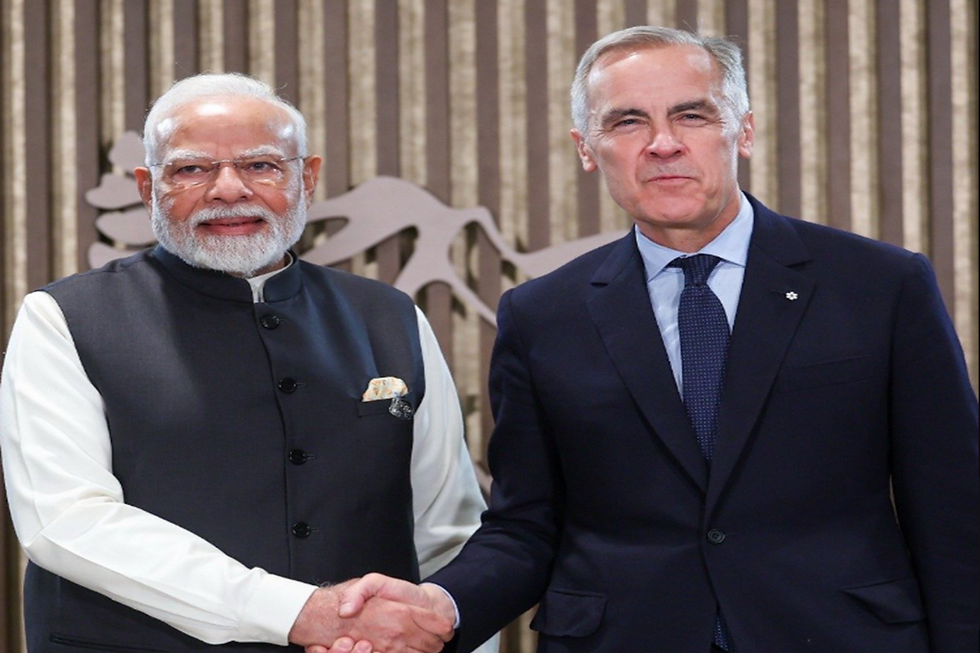
From rupture to recalibration, India–Canada ties are entering their most consequential phase in a decade. Three years ago, diplomats were expelled. This week, red carpets are rolled out. As Canadian Prime Minister Mark Carney touched down in Mumbai on February 27, 2026, it became evident how the real story of this visit lay not in ceremony, but in structure.
Invited by Prime Minister Narendra Modi, Mark Carney's first official visit to India from February 27 to March 2, 2026 since assuming office represents a deliberate step in strategic realignment. After nearly two years of diplomatic strain under his predecessor, followed by gradual normalization throughout 2025 including restored high commissions, revived trade talks, and high-level engagements at multilateral forums, the timing is strategic. Early 2026 provides a critical window to consolidate these gains in trade, energy, and broader bilateral cooperation before potential external disruptions such as evolving U.S. policies or unforeseen geopolitical shifts could again complicate the landscape.
The Diplomatic Rupture That Shaped a Decade
To grasp the stakes, we must revisit 2023, when relations sharply deteriorated over allegations linking Indian agents to the killing of a Sikh separatist activist in British Columbia. New Delhi vehemently denied the claims, branding them politically motivated. The fallout was immediate as diplomats were expelled on both sides, high-level dialogue froze, and CEPA negotiations paused. Trust across institutions eroded, and the relationship entered a phase of strategic uncertainty.
For much of 2023–24, bilateral engagement was cautious, and often defensive. The episode exposed structural weaknesses like the absence of insulated channels to absorb political shocks. Yet economic confidence quietly persisted. Despite tensions, major Canadian institutional investors did not abandon India. Canadian pension funds continued holding stakes in leading Indian companies like Kotak Mahindra Bank, Infosys, and Zomato through 2024, illustrating that commerce is far too important to be abandoned due to political friction.
When Mark Carney assumed office in early 2025, Ottawa signaled a pragmatic reset. Rather than inflaming disputes, his government emphasized structured re-engagement. Carney went to the extent of personally inviting Prime Minister Modi to the 2025 G7 Summit in Canada, despite India not being a member. The invitation was widely read as a symbolic yet strategic gesture. It was evident that Ottawa was serious about repairing ties.
Subsequent meetings, including side discussions at the G20 Summit in Johannesburg in November 2025, reinforced momentum. During the first major Indian ministerial visit post-crisis, Canada’s Foreign Minister Anita Anand and India’s External Affairs Minister agreed on a joint work plan outlining cooperation across trade, climate, energy, research, and diaspora engagement. Carney’s 2026 visit is not the beginning of reconciliation but the institutionalization of it.
Mumbai: Where the Real Reset Began

In Mumbai’s financial corridors, the real reset began long before the official one. Carney’s visit has started in India’s economic heartland, engaging with CEOs, innovators, educators, and representatives of Canadian pension funds operating in India. The economic-first sequencing is deliberate.
Canada is among the top 20 sources of foreign direct investment in India, with cumulative FDI exceeding US$4–5 billion. Over 600 Canadian companies operate in India, while 1,000+ Indian companies maintain a presence in Canada, collectively employing thousands. The Canada Pension Plan Investment Board alone has committed over US$20 billion across infrastructure, real estate, and renewable energy sectors in India. This underscores that economic interdependence remained resilient, even during diplomatic turbulence.
Mumbai discussions focused on:
Reviving and accelerating CEPA negotiations, with bilateral trade already crossing US$8–9 billion in goods annually, plus additional billions in services.
Expanding cooperation in clean energy and critical minerals, vital for India’s transition to renewables and electric vehicles.
Strengthening fintech and digital innovation linkages, leveraging complementary tech ecosystems.
Scaling institutional investment flows, cementing long-term confidence.
Deepening academic and research collaboration, ensuring knowledge transfer aligns with commercial interests.
By foregrounding business engagement, Carney signals that Canada views India not merely as a political partner but as a cornerstone of its Indo-Pacific economic strategy, which commits C$2.3 billion over five years to regional engagement. Where frozen trust thaws, and the currents of diplomacy meet the tides of commerce, the Mumbai leg sets the tone of pragmatic economics first.
New Delhi: Politics with Purpose
Carney travels to New Delhi on March 1, culminating in delegation-level talks with Prime Minister Modi at Hyderabad House on March 2. Here, the focus pivots to strategic consolidation. Discussions are expected to cover:
Trade and investment expansion, including CEPA milestones.
Energy cooperation, including uranium and LNG supply. Notably, reports in late 2025 suggested Canada and India were close to finalizing a long-term uranium supply deal worth about US$2.8 billion.
Critical minerals essential for renewable technologies and electric vehicles.
Agricultural innovation and technology transfer.
Education, research, and innovation ecosystems.
Diaspora and people-to-people engagement, strengthening societal and cultural ties.
Regional and global Indo-Pacific developments, including alignment with Quad initiatives alongside the US, Japan, and Australia.
The India–Canada CEOs Forum, scheduled after formal talks, integrates the private sector into the diplomatic framework, reinforcing the message that this partnership must be commercially viable to endure.
What to Expect: Deliverables Over Optics

1. Movement on CEPA: CEPA remains central. Negotiations had already aimed to significantly boost bilateral trade; expect announcements on resumed momentum or structured timelines.
2. Energy and Critical Minerals Cooperation: Canada is a major supplier of uranium and holds substantial lithium, cobalt, and nickel reserves. India’s clean energy ambitions require diversified, secure supply chains. Agreements here would signal tangible strategic alignment.
3. Institutional Safeguards: New mechanisms like ministerial working groups, structured dialogue channels, and crisis communication frameworks may be strengthened to prevent future diplomatic ruptures.
4. Forward-Looking Joint Statement: The language of the final statement will matter and emphasis on “mutual respect,” “sensitivity to concerns,” and “constructive engagement” would signal lessons learned from 2023.
Why Here, Why Now?
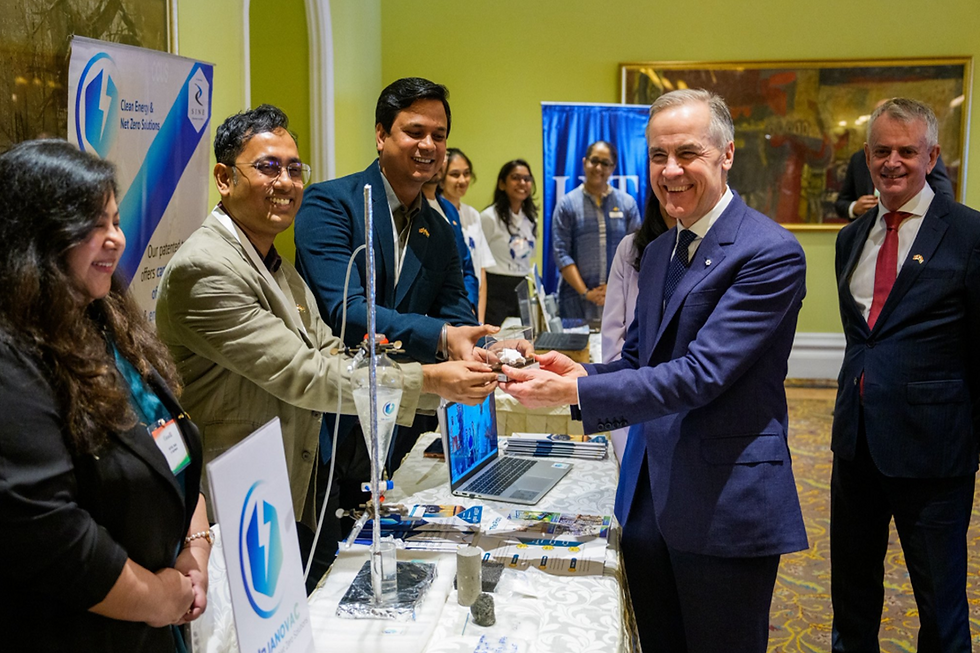
The recalibration of India–Canada ties offers a window into how middle powers manage divergence in a multipolar era.
Diplomatic Momentum: 2025’s re-engagement created a narrow opportunity to consolidate gains. With high commissioners reinstated and ministerial channels restored, early 2026 is strategically opportune.
Canada’s Diversification Strategy: Ottawa’s overreliance on the United States has highlighted geopolitical risks. India offers scale, demographic advantage, and long-term growth potential. Engaging India diversifies markets for energy, agriculture, and advanced technology.
India’s Strategic Calculus: For India, ties with Canada support energy security, industrial modernization, and capital inflows. Canadian investment supports infrastructure expansion, while access to uranium and critical minerals underpins clean energy ambitions.

The broader Indo-Pacific context also matters. Both India and Canada are navigating supply chain fragmentation, energy transition pressures, strategic competition in the region, and technological governance challenges. Deepening cooperation between the two nations not only strengthens supply chain resilience but also reinforces democratic coordination in multilateral forums. If sustained, this partnership could expand into Arctic–Indo-Pacific linkages, the development of technology standards, and collaborative climate adaptation financing.
Prime Ministerial Visits Between the Two Countries

Prime ministerial exchanges have been rare but impactful.
Canadian Visits to India
November 2009: Stephen Harper emphasized trade and civil nuclear cooperation.
November 2012: Harper reinforced economic and strategic engagement.
February 27–March 2, 2026: Carney’s visit focuses on resetting ties and expanding economic cooperation.
Indian Visits to Canada
April 2015: Narendra Modi’s trip, the first in over four decades, resulted in agreements across energy, civil aviation, and skills development.
The relative infrequency underscores significance; each visit marks a potential step-change in engagement.
From Reset to Resilience
Mark Carney’s visit embodies a deliberate shift by transforming a fragile diplomatic reset into a resilient, structured partnership. For Canada, it reinforces Indo-Pacific diversification and energy export strategy. For India, it strengthens resource security, capital inflows, and technological collaboration. For both, it signals maturity by recognizing that differences can be managed without derailing shared interests.
In a world of accelerating geopolitical flux, the India–Canada recalibration offers a lesson for middle powers everywhere: enduring partnerships are built not on fleeting optics but on deliberate architecture in which trust, commerce, and strategic foresight intersect. The question now is not whether Carney can reset relations; it is whether both sides can sustain them long enough to weather the next storm.


Comments