


NCPA: Legacy, Vision & Cultural Diplomacy


The National Centre for the Performing Arts (NCPA), Mumbai, stands as India’s pioneering institution for the performing arts. Founded in 1969, it embodies a vision that blends heritage with modernity, and today plays a vital role in cultural diplomacy, India’s soft power, and global cultural exchange.
Legacy and Vision
When Jamshed Bhabha, with the support of the Tata Trusts, envisioned the NCPA in the late 1960s, India was still shaping its post‑independence identity. The idea was radical: to create a world‑class, multidisciplinary performing arts centre that would preserve India’s traditions while opening doors to global artistic expressions.
At a time when cultural infrastructure was sparse, the NCPA became a pioneering institution. It was not merely a venue—it was conceived as a national laboratory for the arts, where Indian classical forms could thrive alongside Western symphonies, theatre, and dance. This vision reflected a broader ambition: to place India on the global cultural map through excellence in performance and scholarship.
Historical Evolution
Since its establishment in 1969, the NCPA has grown into a cultural landmark on Mumbai’s waterfront. The Tata Theatre, inaugurated in 1980, set new standards for acoustics and design, while the Jamshed Bhabha Theatre, opened in 1999, expanded capacity for large‑scale productions.
Over the decades, NCPA diversified into multiple genres—Indian classical music, Western classical, theatre, dance, film, and contemporary arts. Its festivals, from Symphony Orchestra of India concerts to Mudra Dance Festival, have become fixtures in India’s cultural calendar.
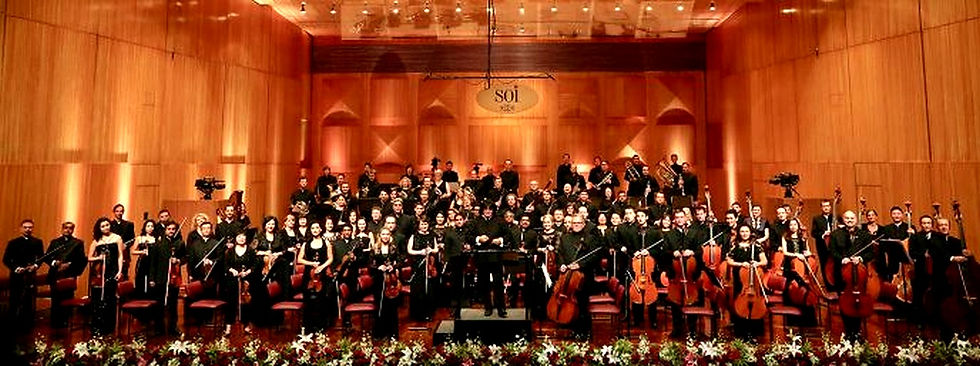
In 2026, the Symphony Orchestra of India (SOI)—founded under NCPA’s aegis in 2006—marks 20 years of musical excellence and global cultural engagement. Over two decades, SOI has evolved into a globally respected ensemble, collaborating with renowned conductors, soloists, and institutions while nurturing homegrown talent through the SOI Music Academy. Its journey reflects not just artistic achievement, but also India’s growing cultural confidence and openness to global traditions. As it celebrates this milestone, SOI stands as a symbol of cultural convergence—where India meets the world through music, strengthening India’s place on the global classical map.
The institution’s evolution mirrors India’s own cultural confidence, moving from preservation to innovation.
Institutional Thought & Cultural Philosophy
The NCPA’s philosophy rests on a delicate balance: tradition and modernity. It has preserved endangered art forms like Dhrupad and folk theatre, while simultaneously embracing jazz, opera, and contemporary dance.
As a curator and archive, NCPA houses invaluable recordings and manuscripts, ensuring that India’s artistic heritage is not lost to time. As an educator, it nurtures talent through workshops, residencies, and collaborations with schools and universities. This dual role—guardian of tradition and incubator of innovation—defines its institutional thought.
In many ways, NCPA reflects India’s cultural philosophy: rooted in civilisational depth, yet open to global currents.
Role in Cultural Diplomacy
Beyond performances, NCPA has become a subtle yet powerful instrument of cultural diplomacy. By hosting international artists—from the London Philharmonic to Japanese Kabuki troupes—it enables global cultural exchange and strengthens India’s soft power.
Its collaborations complement the work of institutions like the Indian Council for Cultural Relations (ICCR), but with a distinctive focus: showcasing India as both a custodian of tradition and a participant in global artistic conversations.
In recent years, NCPA has also engaged with the Global South, positioning India as a hub for cultural cooperation among emerging economies. By fostering dialogue through the arts, it builds bridges that transcend politics and economics.
Looking Ahead
As India’s global profile rises, institutions like NCPA will play a crucial role in shaping perceptions. In a world where cultural diplomacy is increasingly central to foreign policy, the NCPA’s ability to convene artists, audiences, and ideas makes it indispensable.
Its legacy is secure, but its relevance lies in the future: in how it adapts to digital platforms, expands outreach beyond Mumbai, and continues to act as a bridge between India and the world.
In the quiet resonance of a raga, the grandeur of a symphony, or the intimacy of a play, the NCPA reminds us that performing arts in India are not just entertainment—they are instruments of identity, diplomacy, and global connection.


Comments