


ITEC at 62: India’s Quiet Investment in Africa’s Human Capital

For India and Côte d’Ivoire, the priority is to turn these networks into active channels of cooperation. Alumni can help their governments assess training requirements and connect professionals across institutions, ensuring that relationships developed through the programme continue to serve practical purposes.

A country leaves its deepest imprint not when its flag is raised abroad, but when its contribution transforms institutions, empowers people and improves the lives of those they serve. This is the quieter promise of development diplomacy, where the actual value of international cooperation often emerges years after official visits have ended.
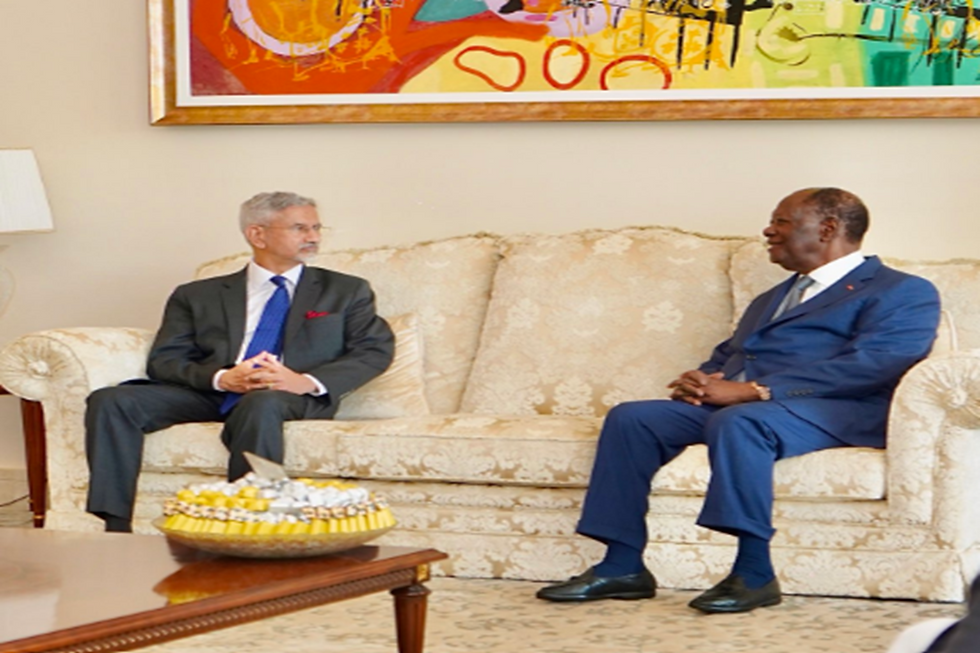
External Affairs Minister S. Jaishankar’s interaction with alumni of India’s Indian Technical and Economic Cooperation (ITEC) programme in Abidjan on October 8, 2026, brought this promise into focus. His remarks highlighted how India’s partnership with Africa seeks to strengthen human capital, with professional training serving as a foundation for deeper bilateral cooperation.
When Training Becomes an Investment in a Country
Established in 1964, ITEC marks its 62nd year in 2026 and has trained more than 200,000 officials from over 160 countries. Its global reach reflects India’s longstanding commitment to sharing developmental experience and technical expertise, while allowing partner countries to adapt that knowledge to their own national priorities.
The programme’s significance, however, extends beyond the number of officials trained. A government can count the professionals it sends abroad, but measuring the public value they bring back requires a different standard. Training becomes meaningful when participants apply their knowledge to improve institutional performance and strengthen the services their governments provide.
ITEC offers opportunities across civilian and defence sectors, including digital governance, public administration, banking, agriculture and security. Its approach also recognises that cooperation must work both ways, allowing Indian institutions to learn from the experiences of visiting professionals. This exchange creates a stronger foundation for partnerships built on mutual respect rather than a one-sided transfer of expertise.
The true value of such programmes lies in what follows the training, since a certificate confirms participation but says little about its lasting impact. When the knowledge acquired benefits only the individual, its reach remains limited. When that knowledge strengthens the institution the individual serves, its benefits can extend across the country.
Where Capacity Building Meets National Ambition
Côte d’Ivoire has emerged as an important partner for India in West Africa, with capacity building remaining a longstanding pillar of bilateral relations. Over the preceding twelve years, the country utilised approximately 800 ITEC training slots, creating a substantial base of professional experience and institutional connections.
The partnership carries wider economic significance. Côte d’Ivoire contributes approximately 40 per cent of the combined GDP of the eight-member West African Economic and Monetary Union, giving its economic and institutional development implications beyond its own borders. Meanwhile, India–Côte d’Ivoire trade reached approximately USD 1.54 billion in the 2024–25 financial year, reflecting the growing economic relationship that development cooperation can complement.
The current training commitments include 123 slots in defence-related fields and another 100 in civilian sectors. These opportunities align with Côte d’Ivoire’s ambitions to advance economic growth, strengthen governance and improve its security capabilities, while giving India scope to support the country’s evolving professional requirements.
One example makes the programme’s institutional reach particularly tangible. Côte d’Ivoire’s Minister of National Education, Literacy and Technical Education, Koffi N’Guessan, is himself a former ITEC alumnus. His participation in the alumni interaction illustrates how professional training can become part of a country’s wider institutional journey, connecting India’s capacity-building efforts with an individual who now holds a senior role in education policymaking.
His career alone cannot establish the programme’s overall impact, but it offers a concrete illustration of the possibilities such exchanges create. The greater opportunity lies in ensuring that expertise acquired through training reaches beyond individual careers and contributes to stronger institutions at home.
The Diplomatic Value of Relationships That Endure
During the interaction, Jaishankar emphasised the lasting relationships formed through professional exchanges, drawing attention to alumni associated with institutions such as Maharaja Sayajirao University of Baroda and the Army War College in Mhow. Their experiences reflect how training abroad can create professional connections that continue long after participants return home.
These relationships have immense practical value. Former participants can connect institutions, facilitate professional exchanges and help identify areas where further cooperation would be useful. Their familiarity with Indian institutions can also make communication easier when governments seek to develop new training opportunities or address shared challenges.
However, it is also important to understand that goodwill alone cannot sustain a partnership. Professional networks lose value when contact fades or when the knowledge acquired abroad finds little application in the workplace. Jaishankar therefore encouraged alumni to maintain their connections with India and continue nurturing the relationships established through ITEC.
For India and Côte d’Ivoire, the priority is to turn these networks into active channels of cooperation. Alumni can help their governments assess training requirements and connect professionals across institutions, ensuring that relationships developed through the programme continue to serve practical purposes.
How Alumni Networks Generate Institutional Results
Jaishankar’s call for sustained alumni engagement points towards the next phase of India–Côte d’Ivoire cooperation. An alumni gathering can celebrate past experiences, but a functioning network can help shape future priorities by providing feedback on existing programmes and identifying emerging professional needs.
His meetings with Côte d’Ivoire’s Deputy Prime Minister, Defence Minister and Foreign Minister also addressed the expansion of existing ITEC collaborations. These discussions connected high-level diplomatic engagement with practical cooperation, creating an opportunity to align training programmes more closely with the country’s national requirements.
Such flexibility is essential as technological developments and changing economic conditions reshape the demands placed on public institutions. Training priorities must evolve accordingly, with governments regularly reviewing whether existing courses remain relevant and where new areas of cooperation could deliver greater benefits.
The more difficult task is assessing what happens after participants complete their training. Do they apply their knowledge in their workplaces? Can their institutions support new practices? These questions help distinguish the number of people trained from the lasting value created by the programme.
India and Côte d’Ivoire can strengthen this process through regular alumni consultations and feedback from participating institutions. Such engagement would help both sides identify useful training opportunities while ensuring that future cooperation remains responsive to changing priorities.
The Legacy Beyond the Training Certificate
ITEC reflects India’s broader approach to development cooperation, which places professional expertise and institutional capacity at the centre of its engagement with partner countries. For African nations pursuing economic transformation, such cooperation can help develop the skills needed to translate policy ambitions into practical outcomes.
The challenge is to ensure that training produces benefits beyond individual participants. Côte d’Ivoire’s existing engagement with ITEC provides a strong foundation, but the next phase should focus on how accumulated expertise can strengthen institutions and improve their ability to serve the public. This requires sustained government engagement and alumni networks that remain connected to real professional needs.
Jaishankar’s description of ITEC alumni as bridges of friendship captures the programme’s wider diplomatic significance. Their experience can sustain relationships between India and Côte d’Ivoire beyond official visits, creating opportunities for cooperation that grow through continued professional contact.
At 62, ITEC’s achievement lies not simply in its longevity or international reach, but in its capacity to turn knowledge into institutional strength. The ultimate test of India’s development diplomacy will be what happens after the training ends, when an alumnus returns home and uses what was learned to make an institution work better for the people who depend on it.


Comments