


No One is Safe Until Everyone is: India’s Bold Health Diplomacy Vision for World Health Day 2026
World Health Day 2026 is a call to action. It challenges nations to rethink priorities, invest in resilience, and commit to a shared future. As global uncertainties continue to unfold, one truth remains clear. The ability to heal beyond borders may well become the ultimate test of leadership in the 21st century. India’s evolving journey suggests that this is not just an aspiration, but an emerging reality.

In the 21st century, the strength of a nation is no longer measured only by its military or economy but by its ability to heal beyond its borders. As the world marks World Health Day 2026 under the theme “Together for Health. Stand with Science,” India’s evolving health diplomacy offers a powerful reminder that compassion, capability, and cooperation can redefine global leadership.
This year’s observance arrives at a time when the lessons of recent crises remain fresh. The pandemic shattered the illusion that borders can insulate nations from biological threats. No country can build a health fortress high enough to keep a virus out. In that stark realization lies the moral and strategic foundation of India’s expanding global health engagement.
Health as the New Grammar of Power
Health aid has emerged as the most credible form of soft power because it is immediate, visible, and human. In today’s geopolitical landscape, influence is increasingly measured by how quickly a nation can respond to human suffering. Health diplomacy is now considered a core element of soft power projection, reshaping alliances in ways traditional diplomacy rarely could.
The scale of global inequality underscores the urgency. Nearly 50 percent of the world still lacks access to essential health services. At the same time, South-East Asia carries almost a quarter of the global disease burden with far fewer resources. These disparities are not just moral concerns, they are structural vulnerabilities that threaten global stability.
India has recognised this reality and repositioned itself accordingly. The journey from “pharmacy of the world” to “architect of health systems” marks a defining shift in India’s global role. It signals a transition from supplier to strategist, from exporter to enabler.
Vaccine Maitri and the Politics of Trust

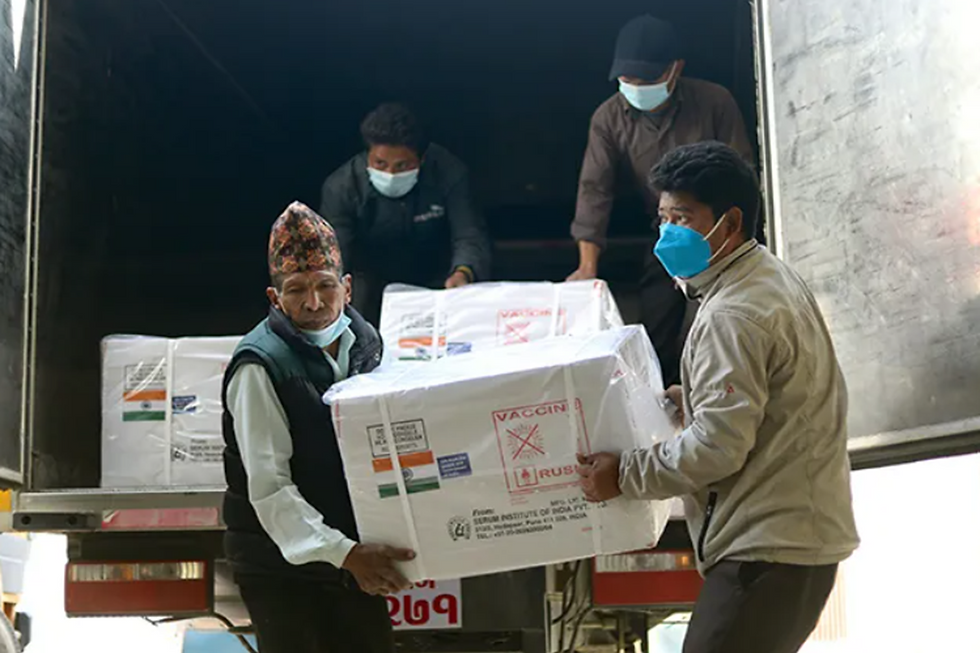
If the last pandemic taught us anything, it is that no one is safe until everyone is. India’s Vaccine Maitri initiative captured this principle with remarkable clarity. At a time when vaccine nationalism dominated global discourse, India supplied over 250 million doses to more than 90 countries, spanning South Asia, Africa, and Latin America.
These were not mere consignments of vaccines but instruments of trust delivered at a moment of profound uncertainty. In regions where access remained fragile, India’s outreach helped steady overstretched health systems and restore confidence. By standing shoulder to shoulder with countries like Nepal, Bangladesh, and Sri Lanka, India expressed solidarity, offering reassurance when it was needed most.
India’s pharmaceutical strength made this possible. The country supplies over 60 percent of global vaccine demand and nearly 20 percent of generic medicines worldwide. With over one-third of global vaccine manufacturing capacity, India sits at the heart of global health security. For over 70 percent of low- and middle-income countries that depend on imported medicines, this role is indispensable.
The economic dimension is equally striking. The global pandemic triggered losses estimated between $12 and $14 trillion. It exposed how fragile health systems can cripple economies. In contrast, every $1 invested in health yields a return of $3 to $5, making healthcare not just a social good but a strategic economic investment.
From Aid to Partnership

India’s health diplomacy is no longer limited to emergency response. It is increasingly focused on building long-term capacity. A telling example is India’s partnership with Mozambique to establish local vaccine manufacturing capabilities. This initiative goes beyond exports by enabling technology transfer, training, and infrastructure development.
Such efforts reflect a deeper shift in philosophy. Instead of fostering dependency, India is helping countries build self-reliance. South-South cooperation in health has grown by over 40 percent in the past decade, with India emerging as a key driver of this transformation.
Digital health has further expanded this outreach. Through the e-VidyaBharti and e-ArogyaBharti network, Indian doctors have provided teleconsultations to patients across African nations. In remote regions of Ethiopia and Malawi, patients have accessed specialist care without travelling long distances. This quiet revolution in healthcare delivery illustrates how technology can humanise diplomacy.
The future of medicine lies not just in molecules, but in algorithms. India’s investments in digital public infrastructure are redefining how healthcare can be delivered at scale. These systems are not confined within national boundaries. They are increasingly being adopted by other developing countries, turning India into an exporter of governance models.
Domestic Strength as Global Credibility

India’s global credibility rests firmly on its domestic achievements. The elimination of polio in 2014 stands as one of the largest public health successes in history. It demonstrated that even complex challenges can be addressed through sustained political commitment and community participation.
More recently, sub-national success stories have attracted global attention. The Kerala government’s handling of repeated Nipah virus outbreaks has been widely studied. Through rapid contact tracing, strict isolation, and transparent communication, the state contained outbreaks with minimal spread. Such examples show how local governance can influence global health strategies.
India’s healthcare sector is projected to reach $370 billion by 2030, driven by digital innovation and preventive care. Artificial intelligence is playing an increasingly important role, with studies suggesting it can reduce diagnostic errors by up to 30 percent. These advances are not just improving domestic outcomes but enhancing India’s global standing.
Health, Economy, and the Cost of Inaction
The relationship between health and economic stability has never been clearer. Climate change alone could push an additional 100 million people into poverty by 2030, largely through health-related impacts. Diseases linked to environmental degradation, food insecurity, and extreme weather events are becoming more frequent and more severe.
India’s response has been to integrate health security into its broader economic strategy. Initiatives under Atmanirbhar Bharat aim to strengthen domestic supply chains while maintaining global outreach. During the early phases of the pandemic, India supplied essential medicines such as paracetamol and hydroxychloroquine to numerous countries, reinforcing its reliability as a partner.
Antimicrobial resistance presents another looming challenge. Often described as a silent pandemic, it threatens to undo decades of medical progress. India’s participation in global action plans reflects an understanding that economic growth cannot be sustained without robust health systems.
A system that protects patents more than patients cannot sustain global trust. India knows this reality. Its advocacy for more flexible intellectual property regimes during global crises has positioned it as a voice for equity in international forums.
Regional Cooperation and Shared Resilience

India’s leadership is particularly visible in its immediate neighbourhood. The creation of the SAARC COVID-19 Emergency Fund, initiated by India, demonstrated how regional cooperation can be mobilised quickly during crises. It provided a framework for sharing resources and expertise at a critical moment.
Platforms like BIMSTEC offer further opportunities for collaboration in disease surveillance, vaccine distribution, and capacity building. India’s geographic and economic position allows it to act as a hub for rapid response, strengthening collective resilience across the region.
Beyond formal mechanisms, India’s contributions extend to global peacekeeping efforts. Indian medical personnel deployed in United Nations missions have provided healthcare services in conflict zones, often under extremely challenging conditions. Their work represents a unique intersection of diplomacy, humanitarianism, and security.
The One Health Imperative
World Health Day 2026 emphasises the importance of science-driven solutions. The One Health approach, which recognises the interconnectedness of human, animal, and environmental health, has become central to this vision. In a region prone to zoonotic diseases and climate vulnerabilities, this integrated framework is no longer optional.
India has begun incorporating One Health principles into its policy frameworks. Early warning systems, environmental monitoring, and cross-sector collaboration are gradually becoming part of the health ecosystem. These efforts align with broader global initiatives involving international organisations working to prevent future pandemics.
The stakes are high and without coordinated action, emerging health threats could overwhelm existing systems. The emphasis on science is therefore a strategic necessity.
Technology, Inclusion, and India’s 2026 Agenda
India’s observance of World Health Day 2026 reflects a convergence of science, inclusion, and innovation. The rollout of the PM Vay Vandana Card, offering Rs. 5 lakh health coverage to citizens aged 70 and above, represents a significant expansion of social protection. It addresses the needs of an ageing population while reinforcing the feasibility of universal health coverage.
The Ayushman Bharat Digital Mission continues to expand, with over 40 crore health cards issued. This digital ecosystem enables real-time claims processing, improves transparency, and reduces inefficiencies. More importantly, it offers a scalable model for other nations seeking to modernise their healthcare systems.
These initiatives demonstrate how domestic policy can shape global narratives. By combining scale with efficiency, India is showing that inclusive healthcare is achievable even in complex, diverse societies.
Standing with Science in an Age of Doubt
One of the most pressing challenges today is the erosion of trust in scientific institutions. Misinformation has the potential to undermine even the most well-designed health interventions. The theme “Stand with Science” is therefore both timely and necessary.
For India, this involves strengthening research ecosystems, improving science communication, and ensuring that evidence-based policies reach the grassroots level. Public trust is not built through directives alone. It requires transparency, consistency, and community engagement.
Science must become part of everyday decision-making, from policymaking to individual behaviour. This cultural shift is essential for building resilient health systems capable of responding to future crises.
A New Measure of Leadership

India’s rise in global health diplomacy reflects a broader transformation in how leadership is defined. Power is increasingly measured by the ability to protect lives, strengthen systems, and build partnerships that endure beyond crises.
From vaccine distribution to digital health infrastructure, from regional cooperation to global advocacy, India is crafting a model that blends pragmatism with principle. Its approach is rooted in the belief that global challenges require collective solutions.
The Indian pharmaceutical industry, valued at over $50 billion and exporting to more than 200 countries, underscores the scale of this engagement. Yet the real strength lies not just in numbers, but in the vision that drives them.
The Road Ahead
The world stands at a crossroads where health, technology, and geopolitics intersect in unprecedented ways. The choices made today will determine how prepared humanity is for the challenges of tomorrow.
India’s experience offers valuable lessons. It shows that capacity must be matched with compassion, and innovation must be guided by inclusivity. It demonstrates that diplomacy, when grounded in human welfare, can achieve outcomes that traditional approaches cannot.
World Health Day 2026 is a call to action. It challenges nations to rethink priorities, invest in resilience, and commit to a shared future. As global uncertainties continue to unfold, one truth remains clear. The ability to heal beyond borders may well become the ultimate test of leadership in the 21st century. India’s evolving journey suggests that this is not just an aspiration, but an emerging reality.


Comments